Abstract
Every medicine that reaches a pharmacist's shelf has passed through one of the most rigorous scientific processes in modern industry. Drug development in industrial pharmacy is that process. It is the systematic journey of identifying a disease target, creating a compound that can act on it, testing that compound exhaustively, and eventually delivering it as a safe, effective medicine to patients. Most people understand that medicines go through clinical trials, but the story begins much earlier, in silico and in the lab, long before a single patient volunteer is enrolled. Understanding what that journey looks like, and why it takes so long and costs so much, matters not just to scientists but to anyone who relies on modern medicine. This article walks through the core stages of drug development, explains how computational tools like molecular docking are reshaping the timeline, and shows why genomics is becoming inseparable from the future of pharmaceutical research.
The Foundations of Industrial Pharmacy and Drug Development
Industrial pharmacy is the branch of pharmaceutical science that bridges laboratory discovery and large scale medicine manufacturing. It encompasses formulation science, quality control, regulatory compliance, and the applied research pipelines that move compounds from discovery toward approved products. Drug development sits at the center of this discipline.
The process is traditionally described in phases, but it is rarely linear. Compounds fail at every stage, and the reasons vary from poor bioavailability to unexpected toxicity to insufficient efficacy in a diverse patient population. Understanding each stage helps explain why the average drug takes over a decade to reach the market from first discovery.
Target Identification and Validation
The first step is identifying a biological target. A target is typically a protein, enzyme, or receptor that plays a measurable role in a disease pathway. Researchers look for targets where intervention, either activating or inhibiting the protein, would produce a therapeutic benefit without causing unacceptable harm to surrounding biological processes.
Validation is what separates a promising hypothesis from a workable research program. A target must be shown to be biologically relevant, chemically tractable, and not so fundamental to normal cell function that blocking it becomes dangerous. Genomics data, particularly information about how gene variants associate with disease outcomes in large populations, has become a powerful way to validate targets before expensive laboratory work begins.
Hit Discovery and Lead Optimisation
Once a validated target exists, researchers search for compounds that can interact with it meaningfully. This is called hit discovery, and it traditionally involved screening thousands of chemical compounds in the laboratory to find candidates that showed measurable activity against the target.
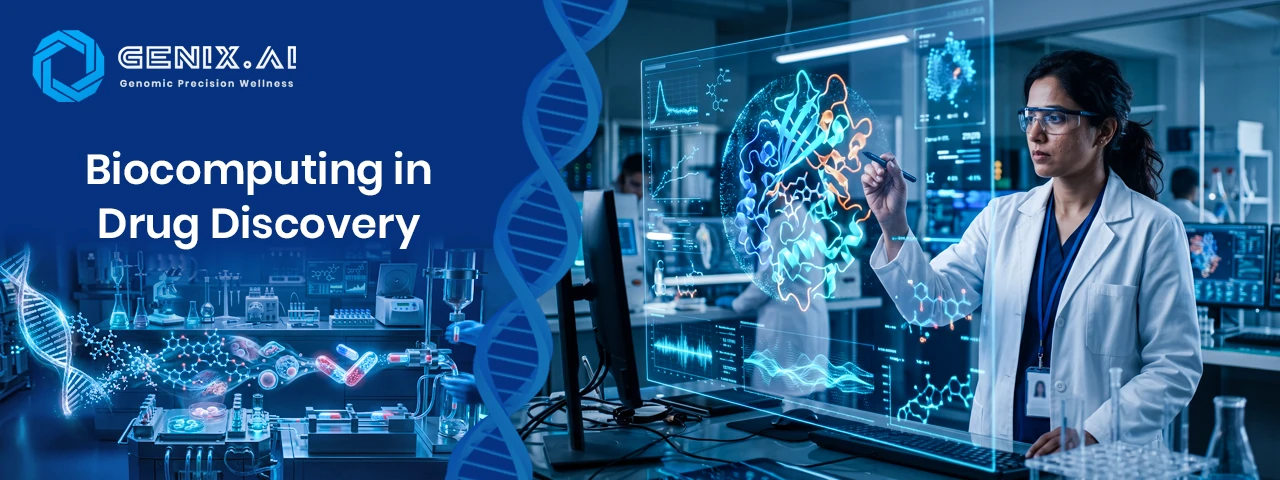
Computational chemistry has transformed this stage. Molecular docking is a technique that uses 3D models of protein structures to simulate how potential drug compounds might fit into the active site of a target protein. Rather than physically testing every compound, researchers can run virtual screens of thousands or even hundreds of thousands of molecules, ranking them by predicted binding affinity and filtering out poor candidates before any laboratory reagent is used.
Once promising hits are identified, medicinal chemists modify their structures iteratively to improve potency, selectivity, and early safety indicators. This stage is called lead optimisation, and it can take two to four years even under favorable conditions.
Preclinical Development and the Role of Computational Tools
Before any compound enters a human being, it must pass preclinical testing. This phase involves in vitro studies using cell cultures and in vivo studies using animal models. The goal is to build a preliminary picture of how the compound behaves biologically and whether it carries unacceptable toxicity signals.
ADMET Profiling
One of the most important assessments in preclinical development is ADMET profiling, which stands for Absorption, Distribution, Metabolism, Excretion, and Toxicity. A compound may bind beautifully to its target in a lab dish but fail entirely when administered to a living organism because it is broken down too rapidly, does not reach the target tissue, or produces harmful metabolites in the liver.
Computational ADMET prediction now allows researchers to screen lead compounds for these properties before committing to animal studies. Tools can assess drug likeness using parameters like Lipinski's Rule of Five, predict oral bioavailability, estimate blood brain barrier penetration for neurological drugs, and flag potential cardiac toxicity through hERG channel modeling. This narrows the field intelligently rather than through expensive trial and error.
Protein Structure Prediction and Binding Analysis
Modern drug discovery depends heavily on knowing the 3D structure of the target protein. Tools like AlphaFold3 have made it possible to predict protein structures with remarkable accuracy even when no experimentally determined structure exists. Once a structure is available, molecular docking simulations predict binding poses, score ligand affinities, and map the specific interactions between a drug candidate and its target, including hydrogen bonds, hydrophobic contacts, and electrostatic forces.
For researchers working on herbal or traditional medicine compounds, network pharmacology extends this further by mapping how multiple phytochemicals might act on several disease related targets simultaneously, a particularly important approach for validating Ayurvedic and AYUSH formulations in a scientifically rigorous way.
Clinical Development: From Phase I to Approval
Once a compound survives preclinical testing, clinical development begins. This is where human participants enter the picture.
Phase I trials focus on safety and dosing, typically in a small group of healthy volunteers or patients with the relevant condition. Phase II trials expand to a larger patient group and begin to assess efficacy alongside continued safety monitoring. Phase III trials involve large, often multinational patient cohorts and compare the new drug against a placebo or existing standard of care. Regulatory bodies like the FDA, EMA, or CDSCO in India review the full dossier of evidence before approving a drug for market.
How Genomics is Changing Clinical Trial Design
One of the most significant shifts in drug development over the last decade is the integration of genomic data into clinical trial design. Patient stratification, selecting the right patients for a trial based on their genetic profiles, improves both the chance of detecting a therapeutic signal and the safety profile of the trial itself.
AI in clinical research now allows research teams to identify patient subgroups most likely to respond to a given therapy, reducing the number of patients needed in a trial and improving the odds of success. Pharmacogenomics, the study of how an individual's genetic makeup affects their response to drugs, is increasingly guiding which patients should or should not receive specific medications.
Why Drug Development Is So Expensive and How Technology Is Reducing Costs
The average cost of bringing a new drug to market has been estimated at over a billion US dollars, and the failure rate across all clinical development stages remains above 90 percent. These figures reflect the compounding costs of a lengthy process where most compounds fail late rather than early.
Artificial intelligence and computational biology are addressing this problem in several ways. Virtual screening through molecular docking reduces the cost and time of hit discovery. AI assisted biomarker analysis accelerates target validation. Genomics platforms help identify patient populations that will respond to a drug before expensive Phase III trials begin. As discussed in the AI in the pharmaceutical industry context, these computational efficiencies are not marginal. They represent a structural change in how the industry approaches its most resource intensive work.
Conclusion
Drug development in industrial pharmacy is a long, costly, and scientifically demanding process, but it is also one of the most important things a society can invest in. Every stage, from target identification to clinical approval, requires tools, expertise, and data infrastructure that continue to evolve. Genomic intelligence, computational chemistry, and AI powered biomarker analysis are not supplementary additions to this pipeline. They are increasingly its foundation.
Genix.ai supports pharmaceutical and biotech teams with AI driven genomic intelligence, molecular docking and CADD services, and computational biology capabilities for pharma research, helping teams move from sequence to drug candidate with greater precision and speed.
FAQ's
1. What is drug development in industrial pharmacy?
It is the systematic process of discovering, testing, and approving a compound as a safe and effective medicine for human use.
2. What is molecular docking in drug discovery?
It is a computational technique that predicts how a drug candidate molecule binds to a target protein using 3D structural simulation.
3. What are the phases of clinical trials in drug development?
Clinical trials follow Phase I (safety and dosing), Phase II (efficacy and expanded safety), and Phase III (large scale comparison against standard of care).
4. What does ADMET stand for in pharmaceutical research?
ADMET stands for Absorption, Distribution, Metabolism, Excretion, and Toxicity, which are the key parameters assessed for a drug candidate's biological behavior.
5. How does genomics improve drug development outcomes?
Genomics helps identify validated disease targets, stratify patients for clinical trials, and predict individual drug response through pharmacogenomics.