Abstract
Lung cancer still gets caught late more often than almost any other major cancer, mostly because it stays quiet until it has already spread. Genetic testing is changing part of that story, not by replacing the tools doctors already trust, but by adding a layer of information that helps identify who needs closer watching and what a tumor is actually made of once it is found. This article walks through where genetics genuinely fits into early lung cancer detection, and where the established screening tools still do the heavy lifting.
Why Lung Cancer Is Often Caught Too Late
Lung cancer remains one of the leading causes of cancer death worldwide, and a big part of that comes down to timing rather than treatment quality. By the time most people notice something is wrong, the disease has often had months or years to grow undisturbed.
1. The Symptom Problem
Early lung cancer rarely announces itself. A persistent cough gets blamed on allergies. Mild breathlessness gets blamed on age or fitness. By the time symptoms are impossible to ignore, the tumor has usually reached a stage where treatment options narrow considerably. This is exactly why early detection tools matter so much in this particular cancer.
2. Who Is Considered High Risk
Doctors generally define high risk around age and smoking history, since those two factors still drive most cases. But family history and certain inherited genetic patterns can shift that risk picture too, which is part of why genetic testing has started entering conversations that used to be purely about age and cigarette count.
What Actually Finds Lung Cancer Early
It helps to be upfront about something here. The established, guideline backed method for catching lung cancer early is low dose CT scanning, not a DNA test. Genetic testing plays a supporting role rather than a replacement role, and understanding that distinction actually makes the genetic side more useful, not less.
1. Low Dose CT Scanning Remains the Standard
For people who meet age and smoking history criteria, annual low dose CT scans are what major health bodies recommend, because they can spot small lung nodules years before symptoms would ever appear. This remains the backbone of lung cancer screening programs around the world.
2. Where Genetic Testing Fits Into the Bigger Picture
Genetic testing adds two things imaging alone cannot. It can flag inherited risk factors that push someone into a closer monitoring category even outside typical smoking history criteria. And once something suspicious is found, genetic or genomic testing of the tumor itself becomes essential for understanding exactly what kind of lung cancer it is.
Inherited Risk Versus Tumor Biomarkers, Two Different Conversations
This is the distinction that gets blurred most often in casual reporting on this topic, and it is worth slowing down for.
1. Inherited Genetic Risk and Screening Eligibility
Most lung cancer is not inherited in a simple family pattern the way something like BRCA related breast cancer can be. But certain inherited variants and a strong family history of lung cancer can still meaningfully raise personal risk. Genetic risk assessment in this context is about awareness and informed conversations with a doctor about earlier or more frequent screening, not a standalone diagnostic answer.
2. Biomarker Testing Once Cancer Is Found
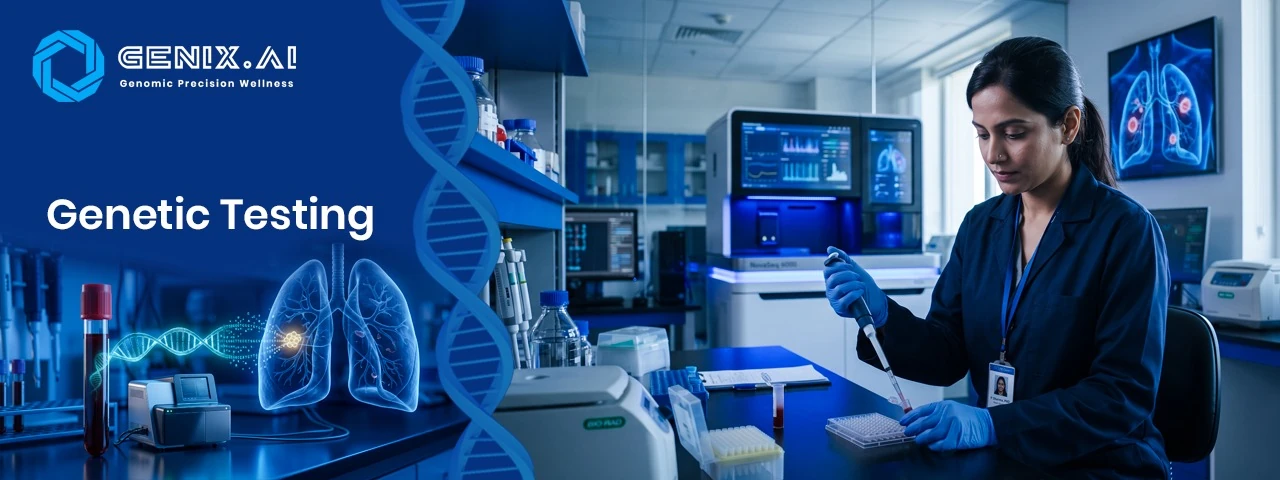
This is where genetics does its most concrete work in lung cancer care. Once a tumor is identified, doctors routinely test its DNA for specific mutations such as EGFR, ALK, ROS1, and KRAS. These are not inherited from parents. They are changes that occurred within the tumor itself, and they directly determine whether targeted therapies are likely to work. This step happens after detection, guiding treatment rather than finding the cancer in the first place, but it is often what people mean when they say genetic testing for lung cancer.
A Simple Scenario That Shows the Difference
Picture a fifty five year old with a strong family history of lung cancer, though they themselves have never smoked. A genetic risk conversation with their doctor leads to closer monitoring than a standard risk calculator would have suggested on age alone. A low dose CT scan a year later picks up a small nodule. A biopsy confirms early stage lung cancer, and genomic testing of the tumor tissue reveals an EGFR mutation, which opens the door to a targeted therapy rather than standard chemotherapy alone. This scenario is illustrative rather than a specific documented case, but it captures how inherited risk awareness, imaging, and tumor level genetic testing actually work together rather than replacing one another.
How a Genetic Biomarker Workflow Typically Runs in a Clinical Setting
Once a tumor sample is available, a fairly structured process usually follows in a modern clinical lab.
- Tumor tissue or a liquid biopsy sample is sequenced for known cancer related mutations
- Raw genomic data goes through variant calling to flag meaningful changes
- Each variant gets checked against current evidence for its clinical significance
- Findings are compiled into a report a treating oncologist can actually act on
- A specialist reviews the report before it informs a treatment decision
Why the Review Step Matters So Much
Genomic evidence in oncology changes fast, with new approved therapies and reclassified variants appearing regularly. A biomarker report that was accurate a year ago can be outdated today, which is exactly why expert review alongside the technology stays essential rather than optional.
Conclusion
Genetic testing has earned a real place in the lung cancer story, but it works best as a partner to screening imaging and clinical judgment rather than a standalone early warning system. For hospitals and laboratories handling the biomarker interpretation side of this work, keeping that review process structured, current, and explainable is exactly what Genix.ai's AI clinical annotation service is built to support, alongside the genetic risk insights included in its consumer genomic reporting. Anyone curious about how that interpretation infrastructure actually works can look at the AI clinical annotation service or the genomic intelligence platform for a closer look.
Frequently Asked Questions
1. Can a genetic test alone detect lung cancer early?
No, low dose CT scanning remains the primary early detection method, with genetic testing playing a supporting role.
2. What is the difference between inherited risk testing and tumor biomarker testing?
Inherited risk testing looks at genes passed down through family, while tumor biomarker testing examines mutations that developed within the cancer itself.
3. Why does biomarker testing matter after a lung cancer diagnosis?
It identifies mutations like EGFR or ALK that determine whether targeted therapies are likely to work.
4. Is liquid biopsy testing a replacement for CT screening?
Not currently, it is considered a complementary and still developing approach rather than a proven replacement.
5. Should someone with a family history of lung cancer get genetic testing?
It is worth discussing with a doctor, since family history can affect screening recommendations even without a confirmed inherited syndrome.