Abstract
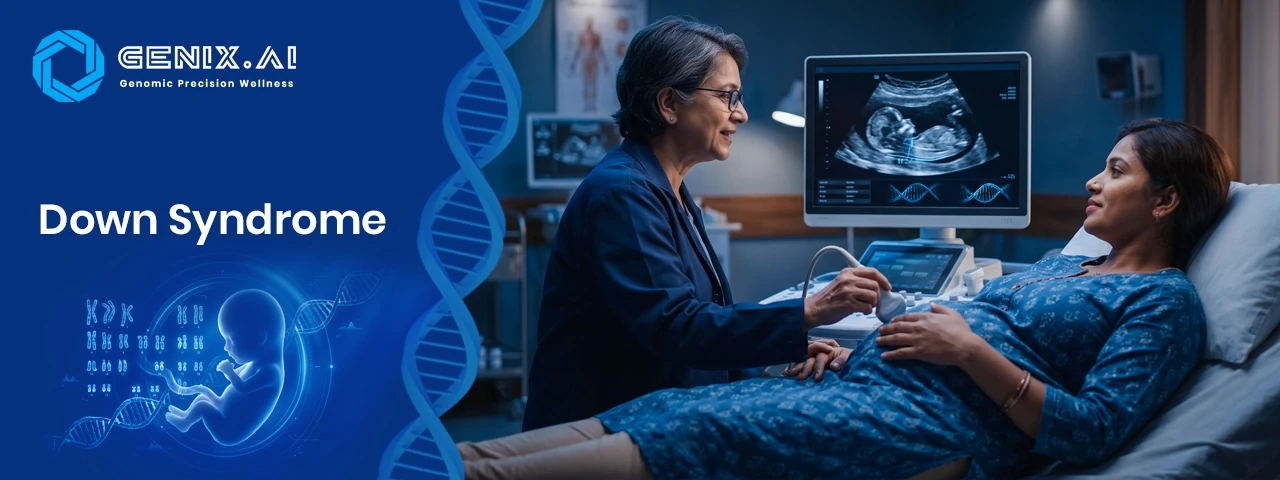
Down syndrome is one of the most common chromosomal conditions worldwide, and for decades families often did not get a clear answer until birth. That has changed. A simple DNA based blood test can now flag the likelihood of Down syndrome as early as the tenth week of pregnancy, giving parents and doctors real time to plan, ask questions, and make informed choices. This article walks through how that testing actually works, what it can and cannot tell you, and where it fits into a broader genetic testing picture.
Why Early Detection Matters
Down syndrome happens when a baby has an extra copy of chromosome 21, a chance event during egg or sperm formation rather than something either parent did. It affects roughly one in every seven hundred births globally, and the likelihood rises somewhat with maternal age, though it can happen in any pregnancy. For a long time, families mostly learned about it at delivery, which left very little room to prepare.
1. What Down Syndrome Actually Is
The extra genetic material changes how a baby develops, often leading to some degree of intellectual disability, certain distinctive physical features, and a higher chance of specific health conditions like congenital heart defects. It is not an illness that gets treated and cured. It is a lifelong genetic difference, and children with Down syndrome grow, learn, and build full lives, often with early therapy and medical support that works best when it starts as soon as possible.
2. What Early Answers Can Change for a Family
Knowing earlier does not change the baby's genetics, but it changes what parents can do with the information. Some families use the time to connect with pediatric cardiologists before birth, since heart defects are common enough to plan around. Others simply want time to read, talk to other parents, and process the news without the added stress of a delivery room surprise. Either way, more time tends to mean more agency.
How a DNA Test Actually Finds Down Syndrome
The method behind modern early detection is genuinely clever. During pregnancy, small fragments of the baby's DNA leak into the mother's bloodstream, alongside her own. A test called noninvasive prenatal testing, usually shortened to NIPT, draws a small blood sample from the mother and reads those floating DNA fragments directly.
1. Reading the Baby's DNA From a Simple Blood Draw
Lab equipment sequences this cell free DNA and counts how much material comes from each chromosome. If chromosome 21 shows up in a higher proportion than expected, that is a strong signal the baby may have an extra copy, which is exactly what Down syndrome is at the genetic level. No needle ever goes near the baby or the uterus, which is what makes this approach noninvasive.
2. Why This Method Works So Well
Because the test reads actual chromosome counts rather than indirect markers like hormone levels, it tends to be far more accurate than the older blood screening methods used through the 1990s and 2000s. Doctors have been able to offer NIPT from as early as the tenth week of pregnancy, which is considerably earlier than most diagnostic alternatives allow.
Screening Versus Diagnosis, A Distinction Worth Understanding
This is the part that gets lost in a lot of casual conversation, and it matters. NIPT is a screening test. It tells you the statistical likelihood that a baby has Down syndrome, not a guaranteed yes or no. A high risk result is a strong signal to investigate further, not a diagnosis in itself.
When a Confirmatory Test Comes Into the Picture
If a screening result comes back high risk, doctors typically recommend a diagnostic test such as chorionic villus sampling or amniocentesis. These involve taking a small sample of placental tissue or amniotic fluid and directly examining the baby's chromosomes, which gives a definitive answer rather than a probability. They carry a small procedural risk that NIPT does not, which is exactly why NIPT exists as a first step rather than a replacement.
A Simple Scenario That Shows How This Plays Out
Picture an expecting mother in her early thirties who chooses NIPT during a routine twelfth week checkup, mostly out of general curiosity rather than any specific concern. The result comes back showing an elevated chance of Trisomy 21. Her doctor explains clearly that this is a screening flag, not a confirmed diagnosis, and refers her for amniocentesis a few weeks later. The diagnostic test confirms the finding. Because she has this information by week sixteen rather than at delivery, she spends the following months connecting with a pediatric cardiologist, joining a parent support group, and going into the birth informed rather than blindsided. This kind of scenario is illustrative rather than a specific documented case, but it reflects how the screening then confirmation pathway is meant to work in practice.
What the Testing Journey Usually Looks Like
Most families move through a fairly predictable sequence once they decide to pursue early detection.
- A doctor discusses testing options during an early prenatal visit
- A blood sample is drawn for NIPT, usually alongside routine prenatal bloodwork
- The lab sequences cell free DNA and reports a risk result within about a week or two
- A low risk result usually means routine care continues as normal
- A high risk result leads to a referral for diagnostic testing and genetic counseling
- Families use the confirmed result, or the reassurance of a clear screen, to plan next steps
Conclusion
Early detection has genuinely changed what a Down syndrome diagnosis means for families, turning a moment of shock at birth into a period of preparation and informed choice. None of this replaces the conversation a family needs to have with their obstetrician or a genetic counselor, since decisions around prenatal testing are personal and medical ones. Where Genix.ai fits into this picture is on the side of what happens once a genetic question needs deeper answers, through its rare disease diagnostics pathway that combines sequencing with expert clinical interpretation, and through the family planning insights built into its genomic reporting for people thinking ahead about their reproductive health. Anyone exploring that side of genetic testing can look at the rare disease diagnostics service or the genomic intelligence platform for a closer look at how the interpretation and counseling process works.
Frequently Asked Questions
1. How early can a DNA test detect Down syndrome?
Noninvasive prenatal testing can typically be done from around the tenth week of pregnancy.
2. Is a DNA screening test the same as a diagnosis?
No, a screening result shows likelihood, while only a diagnostic test like amniocentesis confirms it directly.
3. Does NIPT carry any risk to the pregnancy?
No, it only requires a maternal blood draw, so it carries no physical risk to the baby.
4. What happens if a screening result comes back high risk?
Doctors usually recommend a diagnostic test such as chorionic villus sampling or amniocentesis to confirm the result.
5. Can parents prepare for a Down syndrome diagnosis before birth?
Yes, many families use the extra time to consult specialists, join support communities, and plan care in advance.