Abstract
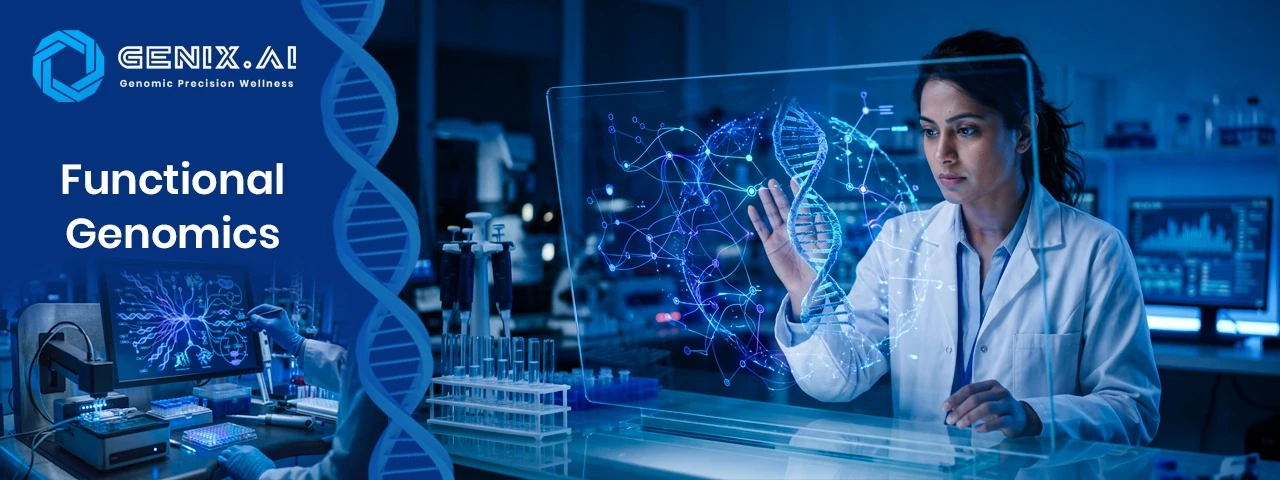
If you have ever wondered how scientists figure out what a gene actually does, not just where it sits on a chromosome, you are already asking about functional genomics. It is the part of genetics that moves past mapping and into meaning, showing which genes switch on, when they switch on, and what happens in the body as a result. This piece breaks the idea down in plain terms, shows how it actually gets studied, and looks at where it fits into modern healthcare research.
Getting a Simple Answer First
Functional genomics is the study of what genes do, not just where they are. A genome on its own is closer to a parts list than an instruction manual. Knowing that a gene exists tells you very little about when the body uses it, how strongly, or what happens downstream if it misfires. Functional genomics fills that gap by studying gene activity directly, usually by measuring which genes are being read and turned into proteins at any given moment.
1. Structure Tells You What a Gene Is, Function Tells You What It Does
Think of the genome as a massive cookbook. Structural genomics is the work of cataloguing every recipe in that book, page by page. Functional genomics is closer to watching the kitchen while a meal is actually being cooked, noticing which recipes get used, how often, and in what order. Both are necessary, but only one of them tells you what is actually happening inside a living cell right now.
2. Why This Distinction Matters to Everyday Health
This is not an abstract distinction for people outside a lab. A gene linked to a disease risk does not automatically mean that gene is active or harmful in a given person. Functional genomics is often what separates a gene that is simply present from a gene that is actually driving a biological process, which matters enormously when researchers are trying to understand disease, not just describe it.
How Functional Genomics Actually Works
Most functional genomics research centers on one core question, which genes are switched on in a given tissue or condition, and by how much. Researchers rarely look at genes in isolation, since a single gene's activity usually only makes sense in the context of everything happening around it.
1. Reading Which Genes Are Switched On
The main tool here is RNA sequencing, often shortened to RNA seq. When a gene is active, the cell copies it into a molecule called RNA before turning it into a protein. By sequencing that RNA, researchers can see exactly which genes were busy at the moment the sample was taken, and roughly how busy each one was compared to a normal baseline.
2. Following the Signal to a Pathway
A single gene rarely acts alone. Once researchers know which genes changed activity, the next step is usually pathway analysis, which groups genes by the biological process they belong to. Tools built around databases like KEGG, GO, and Reactome help turn a long list of individual genes into a much more useful picture, showing which biological systems are actually shifting, not just which single genes moved.
A Simple Example of Functional Genomics in Action
Picture a research team comparing tissue from patients with a chronic inflammatory condition against tissue from healthy volunteers. A purely structural view of the genome would show the same genes present in both groups, since the underlying DNA sequence rarely differs much between them. A functional genomics approach tells a different story. It might reveal that a specific cluster of immune related genes is far more active in the patient group, pointing researchers toward the biological pathway actually driving the disease rather than leaving them to guess from symptoms alone. This kind of scenario is illustrative rather than a specific published study, but it reflects exactly the kind of question RNA sequencing and pathway analysis are built to answer.
What a Functional Genomics Workflow Looks Like in Practice
A functional genomics project tends to follow a fairly consistent sequence of steps, whether it happens in an academic lab or on a computational biology platform.
- Raw sequencing files come in, usually as FASTQ data from an RNA sample
- The reads go through quality control and get aligned to a reference genome
- Gene activity levels are quantified and compared between groups
- Differential expression analysis flags which genes changed significantly
- Pathway enrichment turns that gene list into a picture of affected biological systems
- Results are compiled into figures and a report a researcher can act on
Turning Raw Reads Into a Usable Answer
The technical part of this workflow is demanding, but the value only shows up at the end, when a research team can say with confidence that a particular pathway, not just a single gene, is behind what they are observing. That final step is often the difference between an interesting dataset and a finding worth publishing or acting on clinically.
Conclusion
Functional genomics answers the question a genome sequence alone cannot, which genes are actually doing something and what that activity means. For research teams working with RNA sequencing data, that path from raw sequencing files to a clear, publication ready picture of gene activity and pathway involvement is exactly what Genix.ai's biocompute service is built to handle, alongside its wider next generation sequencing work covering everything from quality control through differential expression and pathway enrichment. Anyone weighing whether to run this kind of analysis in house or hand it to a specialist team can look at the biocompute service details or the next generation sequencing page for a closer look at how the process runs end to end.
Frequently Asked Questions
1. Is functional genomics the same as gene sequencing?
No, sequencing reads the genetic code itself, while functional genomics studies how actively each gene is being used.
2. What is the most common technique used in functional genomics?
RNA sequencing is the most widely used method for measuring which genes are active in a sample.
3. Why does pathway analysis matter in functional genomics?
It groups individual gene changes into biological processes, which is usually far more useful than looking at one gene at a time.
4. Can functional genomics help with disease research?
Yes, it often reveals which biological pathways are actually driving a disease rather than just which genes are present.
5. Do you need a biology background to understand functional genomics results?
Not necessarily, since modern reporting usually translates gene activity data into plain summaries and visual figures.