Abstract
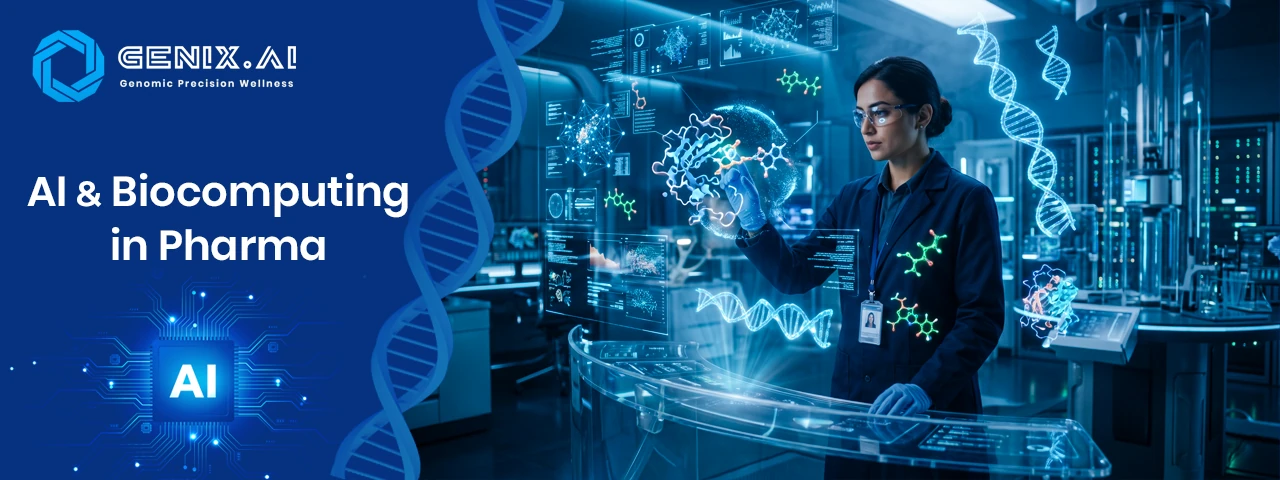
The pharmaceutical industry has always been driven by discovery, but the path from a scientific idea to an approved medicine has never been a short one. For decades, developing a new drug meant investing enormous time, money, and human effort into a process that still carried a high chance of failure. What has changed in recent years is the growing role of artificial intelligence in reshaping that process from the inside. AI is no longer a distant concept in pharma. It is already being applied in laboratories, research centers, and development pipelines around the world. This blog explores what AI is actually doing in pharmaceutical development and why it matters to everyone, not just scientists and researchers.
How AI Is Changing the Way Drugs Are Discovered
Drug discovery has traditionally been a slow, expensive process. Researchers would identify a disease target, screen thousands of chemical compounds to find a potential match, and then test that match through years of preclinical and clinical studies. The average time from early research to a drug reaching patients has historically been over a decade. The cost has often been measured in the billions. AI is beginning to change this in meaningful ways.
Faster Target Identification and Compound Screening
One of the most time consuming parts of pharmaceutical product development is figuring out which biological targets in the body are linked to a specific disease and then identifying which molecules might interact with those targets in useful ways. AI systems can now process enormous volumes of genomic and molecular data far faster than any team of researchers could do manually. This allows scientists to narrow down their focus much earlier and with more confidence.
Machine learning models are also being used to predict how a chemical compound will behave before it is ever synthesized in a lab. This means researchers can eliminate unlikely candidates early and prioritize the ones with a genuine chance of working. The result is a more efficient research process that saves both time and cost.
Biomarker Discovery and Patient Stratification
Another area where AI is making a real difference is in understanding which patients are most likely to benefit from a particular treatment. In the past, clinical trials would enroll large groups of patients and hope that enough of them responded well to the drug being tested. Today, genomic data is being used to identify biomarkers that predict how individual patients will respond. This allows researchers to stratify trial populations more precisely and design studies that are more likely to succeed.
This connection between genomic intelligence and pharmaceutical development is one of the most important shifts happening in the industry right now. When you understand a patient's genetic makeup, you can make better decisions about which drugs are likely to help them and which ones are not.
AI in Clinical Trials and Regulatory Workflows
Improving Clinical Trial Design
Clinical trials are the most resourceintensive stage of pharmaceutical product development. A poorly designed trial can fail not because the drug does not work but because the study was not set up to detect its effect properly. AI tools are being used to model trial designs before they are executed, helping teams identify the right endpoints, appropriate sample sizes, and relevant patient populations.
There is also growing interest in using AI to monitor ongoing trials in real time. If a safety signal emerges or recruitment is falling behind, automated systems can flag this far earlier than traditional review processes would allow.
Supporting Regulatory Decision Making
Regulatory submissions require enormous amounts of documentation covering everything from preclinical safety data to manufacturing processes and clinical outcomes. AI tools are being used to help organize, review, and check this documentation more efficiently. While human oversight remains essential, AI can reduce the manual burden of preparing and reviewing large submission packages, and it can also help identify inconsistencies before they become problems during review.
What This Means for Patients and the Public
The benefits of AI in pharmaceutical development are not limited to pharma companies. When drug development becomes faster and more efficient, it has real consequences for people who are waiting for treatments.
Rare disease research is one area where this is particularly visible. Many rare conditions affect very small populations, which has historically made them difficult and expensive to study. AI tools that can analyze existing genomic and clinical datasets make it possible to extract insights from smaller patient groups and accelerate research that might not have been financially viable before.
There is also a broader point about the personalization of medicine. As AI helps researchers understand the genomic basis of disease responses, the pharmaceutical products of the future are likely to be more targeted and more effective for specific patient populations rather than designed as onesizefitsall solutions.
The cost savings generated through AIassisted pharmaceutical development can also have downstream effects. When AIpowered genomic platforms reduce the cost of drug development, those savings create space for companies to invest in areas of medicine that have historically been underserved.
Challenges That Still Need to Be Addressed
It is important to be honest about the limitations. AI in pharmaceutical development is not a solved problem. The quality of AI outputs depends heavily on the quality and diversity of the data used to train these systems. If training data reflects historical biases in who was included in clinical research, those biases can be carried forward into AI models.
There is also the question of explainability. Regulatory agencies need to understand why an AI system made a particular recommendation, not just that it did. This requires transparent, auditready workflows where the reasoning behind an AI output can be traced and verified by human experts. This is one of the reasons that pharmaceutical and biotech teams are increasingly looking for platforms that combine AI assistance with clear explainability layers rather than blackbox tools that produce outputs without traceable reasoning.
Governance, data privacy, and intellectual property protection also remain serious considerations for pharma teams working with sensitive research datasets. The deployment environment matters, and organizations need flexible options that allow them to maintain control over their data while still benefiting from AIdriven workflows.
Conclusion
AI is genuinely reshaping pharmaceutical development and technology. It is making the process of discovering and developing new drugs faster, more targeted, and increasingly connected to the genomic understanding of disease. For patients, this means faster access to treatments that are better suited to their specific biology. For researchers, it means spending less time on manual screening and more time on the decisions that require scientific judgment.
Platforms designed to support pharma and biotech teams through this shift are becoming a practical part of the research infrastructure. Genix.ai offers a genomicsled platform built for pharmaceutical and biotech teams, supporting biomarker discovery, patient stratification, translational research, and clinical development through explainable, governancealigned AI workflows.
FAQ’s
1.What is the role of AI in pharmaceutical development?
AI accelerates drug discovery, biomarker identification, and clinical trial design by processing large volumes of genomic and molecular data more efficiently than traditional methods.
2.How does AI improve pharmaceutical product development timelines?
By predicting compound behavior early and automating screening processes, AI reduces the time needed to identify viable drug candidates before expensive lab work begins.
3.Can AI replace scientists and researchers in pharma?
No. AI supports and enhances human decisionmaking but requires expert oversight, especially for regulatory submissions, ethical review, and final clinical judgments.
4.How is genomic data connected to pharmaceutical development?
Genomic data helps identify disease targets, predict patient responses, and stratify clinical trial populations, all of which are core to modern pharmaceutical product development.
5.Is AI currently being used in real pharmaceutical research?
Yes. AI tools are already being used across discovery, biomarker validation, trial design, and regulatory documentation in pharmaceutical research worldwide.