Abstract
Every strand of DNA in your body carries a story written in a language of just four letters, and reading that story used to take years and a small fortune. Next generation sequencing changed that completely. It is the technology behind modern DNA testing kits, cancer diagnostics and most of the genetic research happening today, yet most people have never heard the term explained in plain language. This blog walks through what next generation sequencing actually is, how it works, and why it has become such a central part of healthcare and genomics.
Starting With The Basics Of DNA Sequencing
DNA sequencing simply means reading the exact order of the four chemical letters that make up your genetic code, adenine, thymine, guanine and cytosine. That order determines everything from eye color to how your body processes certain medications.
1. The Old Way Of Reading DNA
For decades, scientists relied on a method called Sanger sequencing, named after the researcher who developed it. It worked well but it was slow, reading one strand of DNA at a time. Sequencing an entire human genome using this method took the better part of a decade and cost hundreds of millions of dollars, which is exactly why the first full human genome project took so long to complete.
2. What Changed With Next Generation Sequencing
Next generation sequencing, often shortened to NGS, took a completely different approach. Instead of reading one strand at a time, it reads millions of small DNA fragments all at once, then uses computing power to piece those fragments back together like an enormous puzzle. This parallel approach is what makes NGS so much faster and so much cheaper than the older methods.
How Next Generation Sequencing Actually Works
The process sounds complicated, but it breaks down into a few clear stages.
1. Breaking DNA Into Fragments
The sample, usually collected from blood or saliva, is first broken down into thousands of small overlapping fragments. This might sound like it would create confusion, but the overlap is exactly what allows the fragments to be reassembled accurately later.
2. Reading Millions Of Fragments At Once
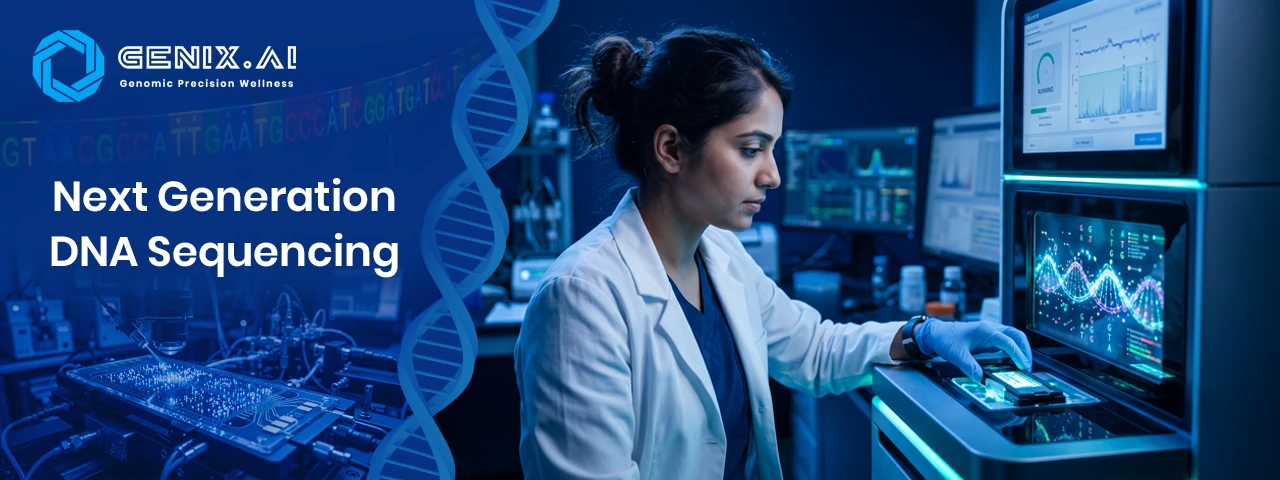
Each fragment is then read simultaneously using specialized sequencing machines. Depending on the platform, this could mean reading tens of millions or even billions of fragments in a single run, something that would have been unthinkable with older sequencing methods.
3. Reassembling The Genetic Puzzle
Once the raw data comes off the sequencer, computational tools align the overlapping fragments against a reference genome, effectively rebuilding the full sequence and flagging where a person's DNA differs from that reference. This is the step where genetic variants, the small differences that make each person's DNA unique, actually get identified.
Why Next Generation Sequencing Matters So Much Today
NGS did not just make sequencing faster, it opened the door to uses that simply were not practical before.
1. Making Personal DNA Testing Possible
Consumer DNA tests that report on nutrition, fitness or hereditary risk all rely on NGS technology to scan large numbers of genetic markers from a single small sample. Without this technology, testing thousands of markers per person would remain far too expensive for everyday use.
2. Supporting Cancer And Disease Research
NGS plays a major role in identifying genetic mutations linked to cancer and other inherited conditions. Because it can scan so much of the genome at once, researchers can spot disease-risk mutations that would be nearly impossible to find with older, narrower testing methods.
3. Powering Broader Scientific Research
Beyond individual health testing, NGS supports large-scale research into gene expression, microbiome composition and population-level genetic studies. Its speed and scale have made it the backbone of most modern genomics research, from academic labs to pharmaceutical companies.
Applications Of NGS
The real reason NGS matters so much is not the technology itself but everything it has made possible across medicine, research and beyond.
1. Applications In Healthcare And Diagnostics
In clinical settings, NGS is used to identify mutations tied to inherited conditions, guide cancer diagnosis and treatment decisions, and screen newborns for rare genetic disorders. It is also the technology behind consumer DNA tests that report on nutrition, fitness or hereditary risk, since scanning thousands of markers from a single sample only became affordable once sequencing could run in parallel rather than one strand at a time.
2. Applications In Scientific Research
Researchers rely on NGS for far more than reading human DNA. It supports gene expression studies, microbiome analysis of gut and environmental samples, and large scale population genetics research that helps scientists understand how genetic variation relates to disease risk across entire communities rather than just individuals.
3. Applications In Agriculture And Beyond
NGS also shows up outside human health entirely, helping researchers study crop genetics for better yield and disease resistance, track genetic diversity in animal populations, and even support forensic identification work. The same core technology adapts to almost any question that comes down to reading and comparing genetic sequences.
Different Types of Next-Generation Sequencing
Not every NGS test looks at the same amount of genetic material, and the differences matter depending on what someone is trying to learn.
1. Whole Genome Sequencing
Whole genome sequencing, or WGS, reads essentially all of a person's DNA, including both the parts that code for proteins and the much larger portion that does not. It gives the most complete picture available but also generates the largest amount of data to analyze.
2. Whole Exome Sequencing
Whole exome sequencing, or WES,focuses only on the exome, the protein coding portion of the genome that makes up a small fraction of total DNA. Since most known disease causing mutations sit within this region, WES offers a more targeted and often more affordable option when a full genome is not necessary.
3. Targeted Panels
Targeted sequencing panels go even narrower, focusing only on a specific set of genes relevant to a particular condition or health question. These panels tend to be faster and more cost effective, though they only reveal information about the genes included in that panel.
What This Means For Someone Considering A DNA Test
Understanding NGS helps make sense of what actually happens after you send off a saliva sample or blood draw.
1. Turnaround Time And Accuracy
Modern NGS platforms can deliver results with very high accuracy, and processing times have dropped dramatically compared to older sequencing methods, often taking just a couple of weeks from sample collection to a finished report.
2. Why The Technology Behind A Test Matters
Not all DNA tests use the same depth or type of sequencing, and this affects how detailed and reliable the results actually are. Knowing whether a test relies on a small panel or full genome sequencing can help you understand exactly what kind of insight you are getting back.
Conclusion
Next generation sequencing turned DNA testing from a rare, expensive scientific procedure into something that fits into a small kit on your kitchen table. It is the reason genetic health insights, cancer risk screening and personalized wellness reports are even possible at scale today. Genix.ai uses next generation sequencing technology across its DNA testing reports and its BioCompute services, applying the same core science to help both individuals and research teams get accurate, meaningful insight from their genetic data.
FAQs
1. What does next generation sequencing actually mean?
It is a technology that reads millions of DNA fragments simultaneously instead of one at a time.
2. How is NGS different from older DNA sequencing methods?
Older methods like Sanger sequencing read DNA one strand at a time, making them far slower and more expensive.
3. Is whole genome sequencing the same as whole exome sequencing?
No, whole genome sequencing reads all of a person's DNA, while whole exome sequencing focuses only on the protein coding regions.
4. Why do consumer DNA tests rely on NGS?
NGS makes it affordable to scan thousands of genetic markers from a single small sample.
5. How accurate is next generation sequencing?
Modern NGS platforms are highly accurate, though accuracy can vary depending on the depth and type of sequencing used.