Abstract
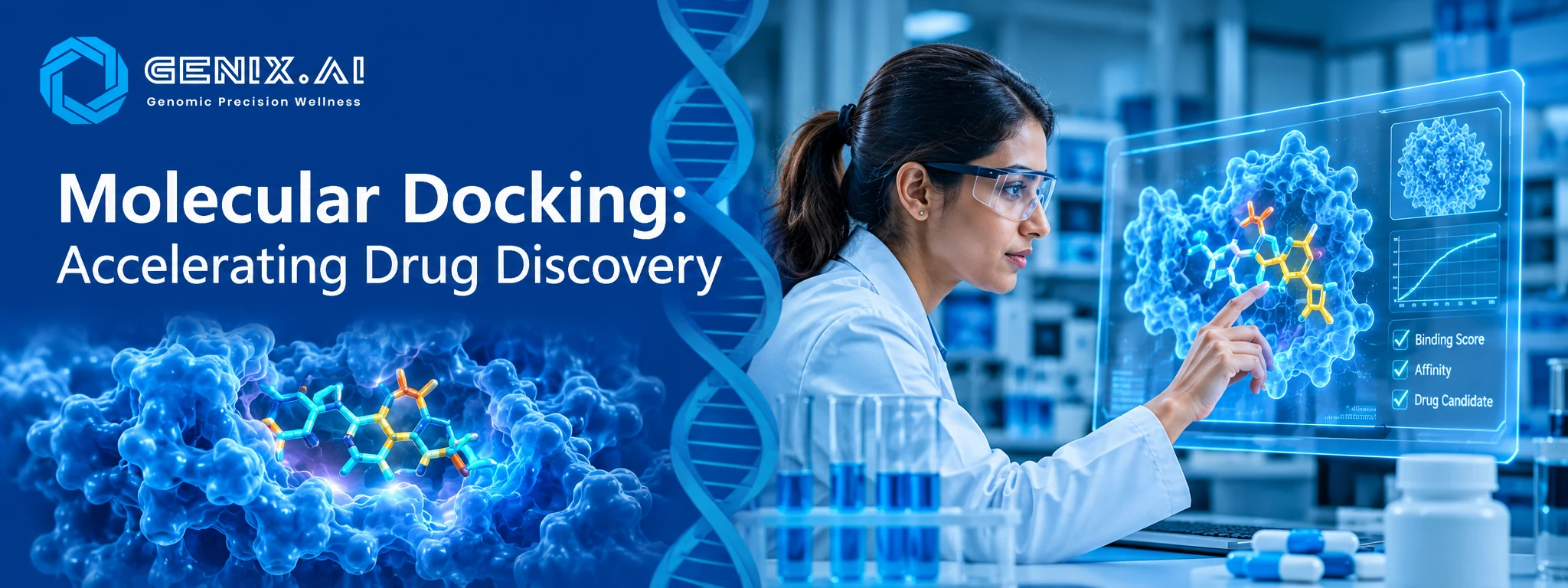
Most drug candidates that enter clinical trials never reach patients, and a surprising number were doomed by choices made at the very start. Molecular docking is one way teams avoid that. It predicts how a small molecule fits into a target protein, so weak options get dropped on a computer before anyone spends money in a lab. This article walks through how it works, where it helps, and what to look for in molecular docking services if you plan to outsource the work.
What Molecular Docking Really Does
1. The lock and key idea
Picture a protein as a lock and a drug candidate as a key. Docking software tries thousands of ways to place the key inside the lock and scores every attempt. The best fits become ideas worth testing. The method goes back to the early 1980s, when the DOCK program came out of Irwin Kuntz’s group at UCSF, and it has been refined ever since.
2. Why a score is a guide and not a verdict
Docking scores are estimates. They separate promising compounds from hopeless ones quite well, yet they cannot replace a lab result. Good scientists use the score as a filter and then check the survivors with other methods. That is why the simulation step matters so much.
Why Drug Discovery Needs It
1. The price of testing blindly
Developing a drug often takes more than a decade. Much of the waste begins early, when teams chase compounds that were never going to bind properly. Physically screening a giant library costs real money and real time. Docking flips that order. Instead of testing everything and hoping, teams test the likeliest candidates first.
2. Where docking saves effort
A computer can screen far more compounds than any lab could handle by hand. A common approach is a funnel. Everything gets a fast first docking run, roughly the top one to five percent moves on, and those hits get a closer look. Docking can also test approved medicines against new targets, which is how many repurposing ideas begin. To dodge the usual traps, this guide to common molecular docking mistakes is a useful read.
How a Docking Project Works
1. From sequence to ranked hits
Here is the usual path from idea to shortlist.
- Choose the target protein, either from the literature or from genomic data.
- Build a 3D structure if no experimental one exists, using AlphaFold3 or homology modeling, and validate it.
- Dock the compound library and rank each pose by predicted binding strength.
- Run molecular dynamics to see whether the best complexes stay stable.
- Run ADMET profiling to check drug likeness and toxicity, then write the ranked report.
Reading about AlphaFold3 and protein intelligence shows why step two has become so much easier.
2. Checking results with simulation
Docking captures a single frozen moment. Molecular dynamics lets the protein and ligand move, which shows whether a promising pose actually holds. Rules such as Lipinski’s Rule of Five add a practical check, since they flag molecules too heavy or too greasy to be absorbed well as a pill. For a tour of the software involved, see this overview of molecular docking tools.
A Short Case Study
1. An established example
Structure guided design shaped the HIV protease inhibitors of the 1990s. Scientists studied the enzyme’s 3D structure and built molecules to fit its active site, and those drugs helped turn HIV into a manageable condition for many patients.
2. An illustrative scenario
This one is hypothetical, not a client story. Imagine a small biotech that holds only the amino acid sequence of a disease protein and a library of a few thousand compounds. Waiting for a crystal structure could cost months. Instead, a provider predicts and validates the structure, docks the library, and keeps the top slice. Simulation then tests that shortlist. On the turnaround times these services typically list, structure prediction takes about 3 to 5 days and docking about 5 to 7, so a first ranked list can arrive within roughly two weeks. The team walks into the wet lab with a handful of ranked candidates in place of thousands of guesses. The related read on docking and AI powered drug development goes deeper on this angle.
Choosing Molecular Docking Services
Questions worth asking
Start with inputs. A solid provider should work from a bare protein sequence and predict the structure itself. Find out which software sits behind the results, since open tools like AutoDock Vina and GROMACS are widely accepted in published research. Ask how the hits get validated, because docking alone rarely settles anything. Confidentiality matters too, so look for an NDA before any data changes hands. Finally, get turnaround times and pricing in writing.
Conclusion
Docking will not discover a drug by itself, yet it can save a team months of guesswork. Genix.ai offers molecular docking services as part of its BioCompute offering, from AlphaFold3 structure prediction through docking and simulation to ADMET profiling. Single target docking starts at $1,000 with a typical turnaround of 5 to 7 days, and the full pipeline is listed at four to eight weeks, all under NDA. Pharma and biotech teams can see how this fits their pipeline on the pharma and biotech page, or ask for a free consultation on the docking page.
FAQ's
1. What is molecular docking?
It is a computer method that predicts how a small molecule binds to a target protein.
2. How accurate is it?
It ranks candidates usefully but gives estimates, so lab testing still confirms the results.
3. Can docking work without a crystal structure?
Yes, a 3D structure can first be predicted from the sequence with tools such as AlphaFold3.
4. How long do molecular docking services take?
Single target docking typically takes about 5 to 7 days and library screening about 7 to 14 days.
5. Is my data safe with an outsourced provider?
A good provider signs an NDA first and you keep full ownership of your compounds and results.