Abstract
Ask almost any Indian family about their health worries and diabetes comes up fast, usually followed by heart trouble and a condition that seems to run through the relatives. Annual checkups are good at spotting problems once they show. DNA testing asks something different, which is what your body may be prone to long before anything appears. This blog looks at how that works in India today, what it can honestly offer, and how to turn a report into real decisions.
Why Personalised Healthcare Needs a Genetic Layer
1. One size advice leaves gaps
Most health advice is written for an average person who does not exist. Eat less sugar, walk more, get a checkup. All of it is sensible, yet it treats everyone the same. The need for something sharper is clear in India. A national study published in 2023 estimated that around 101 million people in the country were living with diabetes, and South Asians are known to develop type 2 diabetes and heart disease earlier and at lower body weights than many other groups.
2. What a DNA test adds
Your genes do not tell the whole story, but they do shape how your body handles sugar, fat, medicines and more. A DNA test reads those inherited tendencies and turns them into a report. Your DNA does not change over time, so the insight stays useful while your habits and numbers move around it. You can read how personalised genetic testing works in India for a broader buyer’s view.
What DNA Testing Can Tell You
1. Metabolic and heart health
A wellness focused report looks at markers tied to blood sugar, heart health, weight management and thyroid function. That matters most if diabetes or cardiac problems already run in your family. A result that points to higher inherited risk does not mean illness is coming. It means you can watch the right numbers sooner and plan prevention with your doctor.
2. Nutrition and fitness
Some people respond very differently to the same diet or the same workout. Genetic reports can point to how your body may handle certain foods, recovery and training load, which gives you a better starting point than guesswork. Our post on DNA testing and your weight loss plan shows what this looks like in practice.
3. Family planning and children
Carrier screening can show whether a couple carries changes linked to inherited conditions, which helps with decisions before a pregnancy. Pediatric reports aim to give parents early insight into a child’s health and development. Both are sensitive areas, so professional guidance matters here. This explainer on carrier screening for couples is a gentle place to start.
4. How you respond to medicines
Pharmacogenomics studies how genes affect drug response. A well known example is CYP2C19, a gene whose variants can change how some people respond to the blood thinner clopidogrel. Not every report covers this, so ask what a test actually includes.
Evidence and Comparison
1. A real world example
One verified reviewer on a preventive genomics report page said they considered themselves fit, yet the report showed a high genetic risk for type 2 diabetes. They changed their diet right away. It is one self reported story, but it shows the idea well. Fitness does not cancel inherited risk, and knowing about it early gives you room to act.
2. Routine checkup versus a DNA informed approach
Routine Checkup: A routine checkup helps assess your current health status. The results may change with each visit, depending on your health and lifestyle. It provides general health guidelines and helps identify existing health problems, but it may not reveal inherited genetic tendencies.
DNA-Informed Approach: A DNA-informed approach uses genetic information to identify potential health risks and inherited tendencies. These genetic factors generally remain the same throughout life. The results can help healthcare professionals provide advice tailored to an individual's genetic profile, but they indicate potential risks rather than diagnosing a disease.
How DNA Testing Works in India
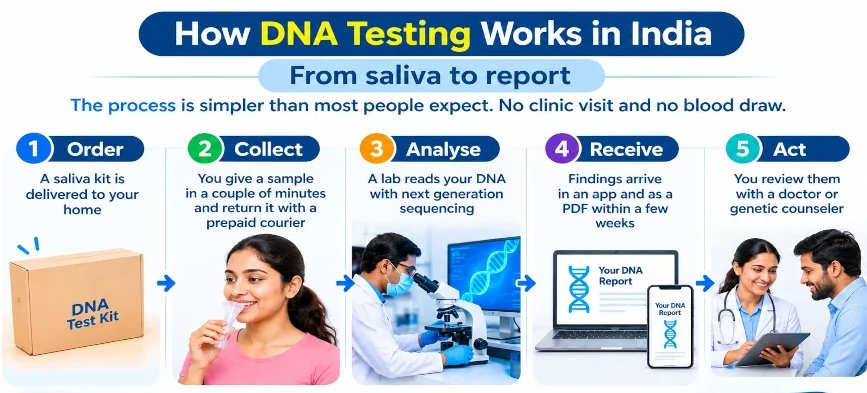
1. From saliva to report
The process is simpler than most people expect. No clinic visit and no blood draw.
2. Privacy and trust
Genetic data cannot be changed like a password, so privacy is a fair concern. Look for encryption, a clear deletion option and an honest account of how data is stored. You can learn more about genomic data privacy in India and how a provider’s security architecture is described.
Getting the Most From Your Results
1. Bring in a professional
A report is a starting point and not a treatment plan. A doctor or genetic counselor can connect it with your history and current tests. This matters most when a result is unexpected or unclear.
2. Keep expectations realistic
DNA testing shows tendencies. It cannot diagnose illness or promise what will happen. Lifestyle, environment and chance all play a part, so a high risk result is a reason to plan and a low risk result is not a reason to relax.
Conclusion
Personalised healthcare in India will not come from one test. It will come from people who know their own tendencies and act on them with good medical support. Genix.ai is built for that preventive idea, with an at home saliva kit, a report you can open in an app or as a PDF, and a range of tests for different goals. Its Vital report focuses on blood sugar, heart health, weight management and thyroid markers, which suits families with those worries. The company also states plainly that it does not diagnose disease, and its plans can include a 30 minute video consultation with a genetic counselor. Browse the full range of DNA reports or download a sample report first.
FAQs
1. Is DNA testing available at home in India?
Yes, a saliva kit is delivered to your door and returned with a prepaid courier.
2. Can a DNA test diagnose a disease?
No, it shows inherited tendencies and should be reviewed with a qualified doctor.
3. Who should consider DNA testing?
Anyone curious about inherited health patterns, especially people with a strong family history.
4. Can I share my report with my doctor?
Yes, the report is designed to be shared with healthcare professionals.
5. Is my genetic data kept private?
Choose a provider that encrypts your data and offers a way to request deletion.