Abstract
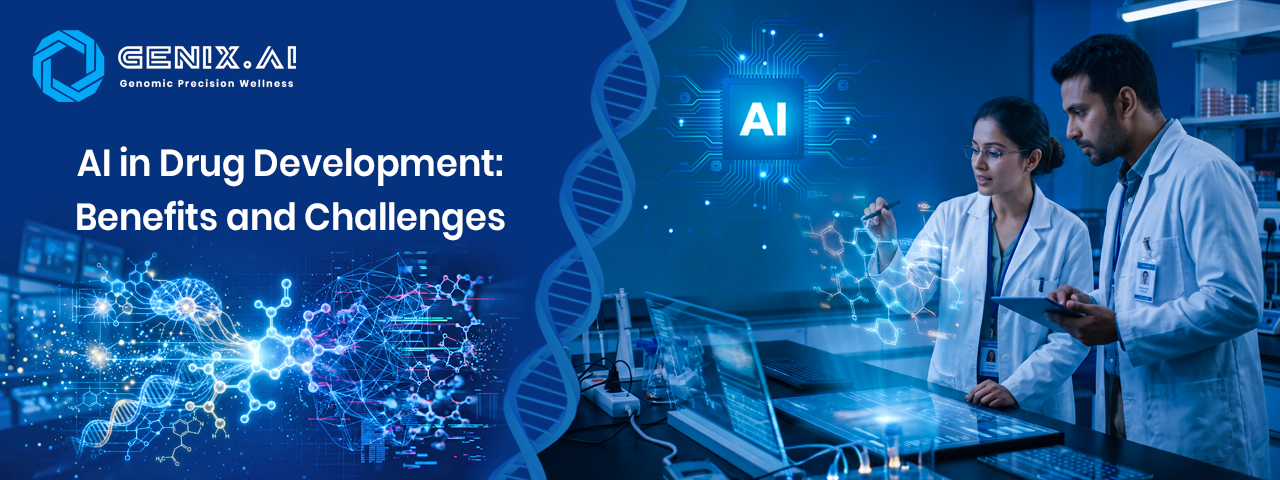
A new medicine usually takes 10 to 15 years to reach patients, and roughly nine in ten candidates that enter clinical trials never get there. That is a hard number to sit with. Artificial intelligence is starting to bend it by helping researchers choose better targets and design smarter molecules. It is also changing how trials are run. This article walks through AI in drug development stage by stage, shows where it has already delivered, and explains where caution still matters.
Why Drug Development Needed a Rethink
1. A Long Road With Costly Failures
Bringing a drug to market is a slow relay race. Discovery alone can take years. Then comes preclinical testing, and after that three phases of human trials. Published estimates put the full journey at 10 to 15 years, and the bill for a single approved drug runs into the billions once failed projects are counted. When a candidate fails late, all of that time and money goes with it.
2. Where Data Became the Missing Piece
Labs have never lacked data. Genomes and patient records pile up in databases around the world. What was missing was a fast way to spot patterns across all of it. That gap is where machine learning in drug development earns its place. Algorithms can learn from millions of examples and point researchers toward the few that deserve a real experiment.
3. Finding and Validating Targets
Everything starts with a target, usually a protein tied to a disease. AI drug discovery tools scan next generation sequencing datasets and published studies to see which targets keep appearing in patients. Deep learning has also transformed structure prediction. The AlphaFold database now holds more than 200 million predicted protein structures. That is a map chemists once had to draw one protein at a time.
4. Screening and Designing Molecules
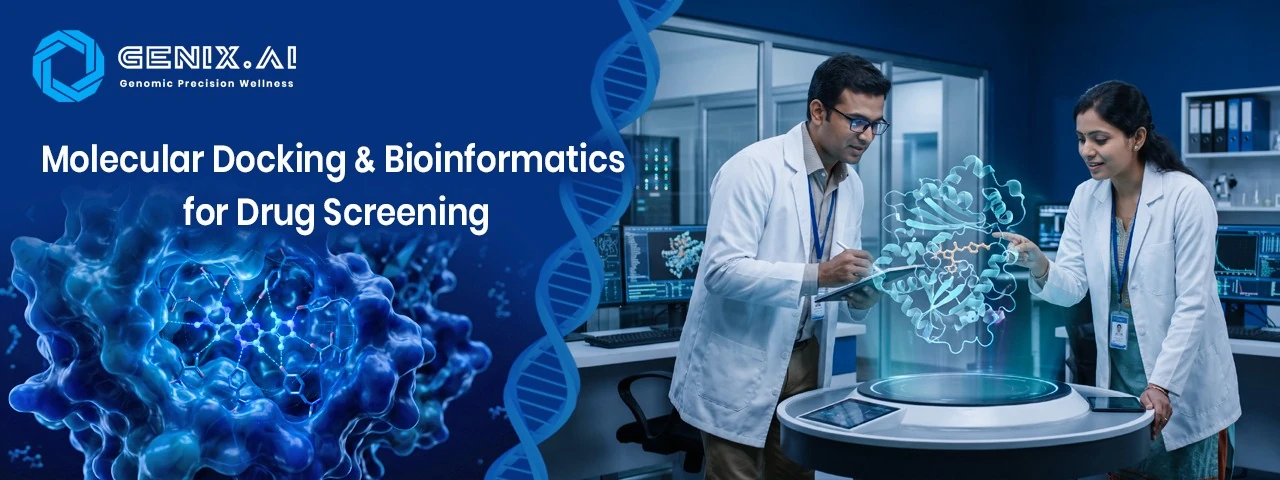
Once a target is chosen, the hunt for a molecule begins. Rather than testing every compound by hand, researchers use molecular docking to predict how well a compound fits into the target. Machine learning models then score candidates for safety and absorption before a chemist ever picks up a pipette. This is where artificial intelligence in drug discovery saves a lot of bench time. For a closer look, read how molecular docking accelerates AI powered drug development.
5. Predicting Safety Early
Many candidates fail because of toxicity or poor absorption, problems that used to show up only after months of lab and animal work. Predictive models now estimate these risks from a molecule's structure, so weaker candidates can be dropped sooner. That does not replace laboratory testing. It simply means fewer doomed compounds reach it, which saves both time and animals.
6. Smarter Clinical Trials
Trials are the slowest and costliest part of the journey, so better design pays off quickly. AI can match patients to studies using genomic and clinical signals, which helps teams build groups that are more likely to respond. The article on trial patient stratification goes deeper. Fewer mismatched patients means cleaner results and fewer expensive surprises.
A Real Example From the Pandemic
1. How Baricitinib Was Found
In early 2020, researchers at BenevolentAI used an AI platform to search medical literature for approved drugs that might stop the coronavirus from entering cells. It flagged baricitinib, a medicine already used for arthritis. Clinical trials followed, and regulators later approved it for hospitalised coronavirus patients.
2. What the Case Teaches
The lesson is not that AI works magic. Human scientists still checked the idea, and trials still did the proving. What AI did was turn a mountain of reading into a short list, and that head start mattered when time was short.
The Limits Every Reader Should Know
1. Data Quality and Bias
A model is only as good as the data it learns from. If a training set leaves out certain populations, its predictions can miss how a drug behaves in them. That is why diverse genomic data matters, a point covered on the bias and population intelligence page.
2. Explainability and Oversight
Scientists and regulators both want to know why a model made a call. Black box answers are hard to defend in front of a review board. Good practice keeps humans in the loop and documents how models were validated. The article on the 20 guiding principles of good AI practice in drug development goes further on this.
Where the Field Is Heading
1. From Single Tools to Connected Workflows
The next step is joining the pieces. Genomic analysis, structure prediction and docking often sit in separate systems today. Teams that connect them can carry a finding forward without starting over. Pipeline automation and cloud computing are making that realistic even for smaller groups. A connected AI and bioinformatics stack is where that work begins.
2. What It Means for Patients
For people waiting on a treatment, the promise is simple. Shorter searches and fewer late failures can mean promising medicines reach trials sooner, and rare conditions with small patient groups may finally attract serious research. None of this is guaranteed, and every new drug still has to prove it is safe and effective in people. Progress will be steady rather than sudden.
Conclusion
AI is not replacing scientists in drug development. It is giving them a sharper starting point and fewer dead ends. For teams that want that edge, Genix.ai offers a Pharma and Biotech platform built around biomarker discovery and patient stratification, with explainable outputs that reviewers can trace and deployment choices that range from SaaS to on premise. Its BioCompute service covers protein modeling and molecular docking, with docking campaigns listed at five to ten days. If you are weighing where AI could fit in your own pipeline, you can request a demo and start the conversation.
FAQ's
1. What is AI in drug development?
It means using algorithms to study biological and clinical data so researchers can make faster, better informed decisions at every stage.
2. Can AI discover a drug on its own?
No, AI can suggest targets and candidates, but scientists and clinical trials must still confirm them.
3. How does machine learning help in drug development?
It learns from past data to predict which compounds are likely to work and which patients are likely to respond.
4. Does AI make drugs cheaper?
It can cut wasted lab work and late failures, though it cannot remove the cost of human trials.
5. Is AI in drug discovery regulated?
Every medicine still passes the same regulatory review, and regulators are actively shaping guidance on how AI is used.