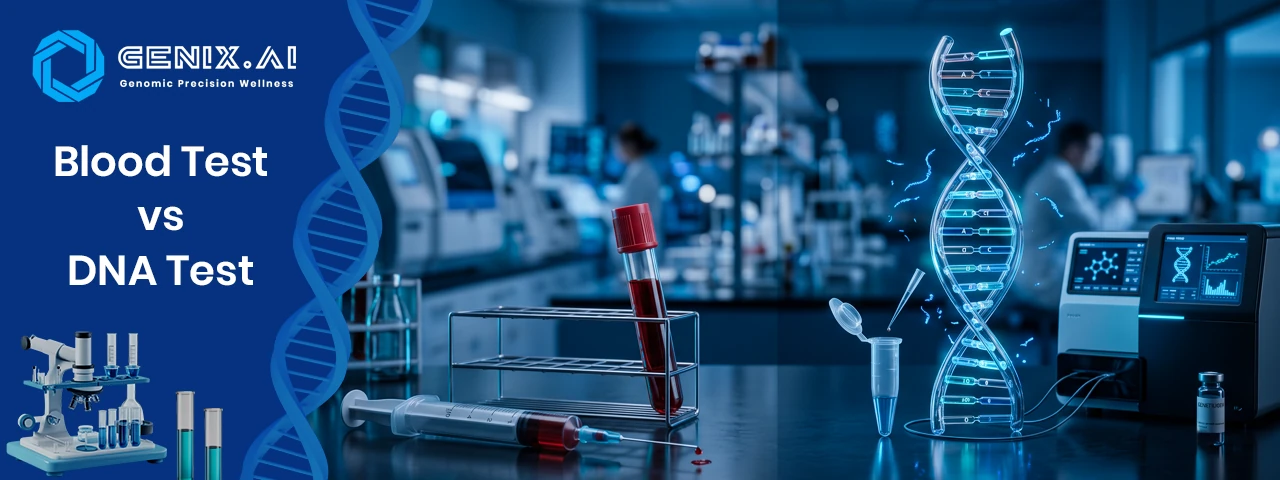
Ask someone the difference between a blood test and a DNA test. Most people will talk about needles and labs. That is fair, because on the surface both look similar. A person takes your sample. It goes to a lab. A few days later, you get a report. But that is where the similarity ends. What each test checks, how long the result stays true, and what you do with the result are very different things. Many people mix up the two tests, and this often confuses, especially for someone taking a genetic test for the first time.
Abstract
Many people take a blood test at some point. Maybe it happens during a normal checkup. Or maybe a doctor wants to check something like tiredness or a health problem. Fewer people take a DNA test. And even fewer understand how different the two tests really are. A blood test shows what is happening in your body right now. A DNA test shows something true since before you were born. This blog explains what each test does. It also explains where the two tests are similar and where they are not. By the end, you will know which test answers the question you actually have.
What Is a Blood Test
A blood test takes a small sample of blood from your arm. It checks what is inside your blood at that exact moment. This is why doctors sometimes ask you to fast before the test. Eating or drinking before the test can change the results. A blood test can check many things, such as sugar levels, cholesterol, liver health, thyroid hormones, vitamin levels and blood cell counts.
What Blood Tests Reveal
Your blood changes all the time. It changes during the day, and it also changes over months and years. This is why blood tests are useful for tracking your current health. A blood test can find an infection early. It can show if your medicine is working. It can also show if an organ is not working well. Doctors often ask you to repeat a blood test every few months. This is because the results really do change, and your diet, stress, sleep and daily habits all affect the numbers. So a test taken this month may look different from one taken next month, and that is completely normal.
What Is a DNA Test
A DNA test works in a different way. It does not need blood. Most DNA tests use a simple saliva sample or a cheek swab. Instead of checking what is happening in your body today, it reads the genetic code inside your cells. This code has been the same since the day you were born. Your DNA does not change based on your diet or sleep. It stays the same whether you take the test today or in twenty years.
What DNA Tests Reveal
A DNA test cannot tell you your blood sugar level today. But it can tell you something different. It can show if you have a genetic risk for certain health conditions. It can show how your body may respond to certain foods or exercise. It can also show traits you were born with. These results stay the same for life, which means a DNA report taken today will still be true many years later. This is very different from a blood test, which can look completely different just a few weeks after you take it.
Key Differences Between Blood Tests and DNA Tests
Nature of the Information
Think of it this way. A blood test is like a photo; it shows one single moment. A DNA test is more like a blueprint; it shows something that does not change. This is why a blood test needs to be repeated often, while a DNA test usually does not.
Sample Collection Process
There is also a big difference in how each test is done. A blood test needs a trained person to draw blood from a vein, and some people feel nervous about needles. A DNA test is much simpler. Most DNA tests only need saliva, and you can collect it yourself at home with no needle and no appointment needed.
Purpose and Application
Blood tests are mostly used to find out what is wrong right now. This could be an infection, a low vitamin level or an organ problem. DNA tests are used more to predict future risk, and this can include your ancestry, your health risks or how your genes affect your nutrition and skin. In simple words, a blood test looks backward and forward a little, while a DNA test looks far into the future.
Frequency and Cost Over Time
Money is another thing to think about. A single blood test does not cost much, but since you repeat it often, the cost adds up over the years. A DNA test usually costs more at first, but since you only need it once, it may actually save money over time.
Which Test Should You Choose
When a Blood Test Makes Sense
If you need to check your cholesterol, blood sugar or vitamin levels, a blood test is the right choice. It is also important for finding infections or managing conditions like diabetes or thyroid problems.
When a DNA Test Makes Sense
A DNA test is helpful when you want to understand risks that may come in the future. This is useful for families with a history of genetic disease. It is also helpful for people who want to understand their fitness, nutrition needs or take early steps toward prevention. Many people take a DNA test simply to learn more about their body, even when they feel completely healthy at the time.
Conclusion
The right test depends on the question you want answered. If you want to know what is happening in your body today, choose a blood test. If you want to understand your long term health, family risk or genetic traits, choose a DNA test. Many people now use both together for a more complete picture of their health. Neither test replaces the other, they simply answer different questions. Understanding this simple difference can help you avoid unnecessary tests and make better choices for your health. If you are new to genetic testing, Genix.ai offers an easy at home DNA test using a simple saliva sample. It uses next generation sequencing technology to give you a clear and personal view of your long term health, well before any symptoms appear.
FAQs
1.Can a DNA test replace a blood test?
No, both tests check different things, so one cannot replace the other.
2.Do DNA tests need blood?
No, most DNA tests only need a saliva sample.
3.How often should I take a DNA test?
Only once, since your genetic code does not change.
4.Is a blood test more accurate than a DNA test?
No, both are accurate, they simply measure different things.
5.Can a DNA test guarantee future disease?
No, it only shows risk, not a guaranteed outcome.