Abstract
If you have ever wondered how scientists are getting better at understanding cancer, a big part of the answer is a technology called next generation sequencing. It lets researchers look directly at the DNA inside a tumor and see what has gone wrong. That single ability has opened doors that were closed for decades, earlier detection, treatments built around a person's actual biology, and a much clearer picture of why some cancers come back or stop responding to treatment. This blog walks through what next generation sequencing actually does and why it matters, in plain terms.
What Next Generation Sequencing Actually Is
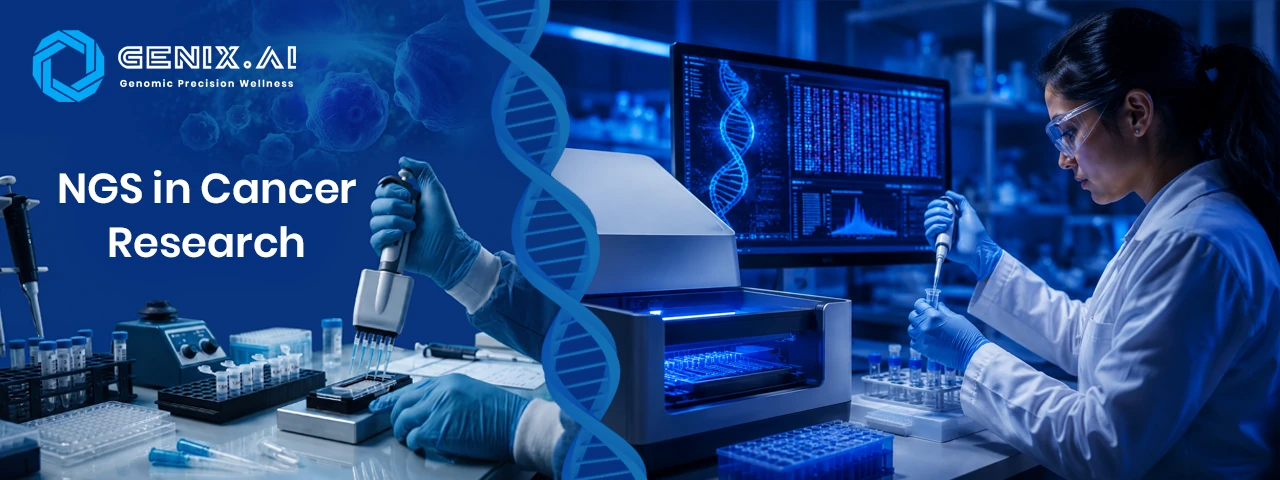
Here's the simple version. DNA is basically a long string of instructions written in a genetic code. Next generation sequencing, or NGS, is a method that reads huge stretches of that code at once, instead of going bit by bit like older techniques did. Imagine trying to find a typo in a thousand page book. Old methods made you read one page at a time. NGS lets you scan the whole book almost instantly.
For cancer, this is a big deal because tumors are not identical to each other. Two people with the same type of cancer can have completely different mutations driving it. NGS gives researchers a way to actually see those differences instead of guessing.
Why the Old Way Wasn't Cutting It
Before NGS, sequencing was slow, costly, and only practical for small sections of DNA at a time. Large scale cancer studies were hard to pull off because there simply wasn't enough time or budget to sequence everything that needed checking. NGS brought the cost and time down so much that whole genome analysis became something labs could actually do on a regular basis, not just a rare, expensive project.
Where Next Generation Sequencing Makes a Real Difference
Spotting Cancer Before It Shows Up
One of the more encouraging uses of NGS is catching cancer early, sometimes before a person notices any symptoms at all. There's a method called liquid biopsy that picks up small fragments of tumor DNA floating in the bloodstream. It sounds almost like science fiction, but it works, and it means doctors can sometimes flag a problem months or years before it would otherwise be found.
Finding the Actual Cause, Not Just the Symptoms
Instead of treating cancer as one broad disease, NGS lets researchers zoom in on the specific mutations pushing a tumor to grow. That's a meaningful shift. It's the difference between treating a fever with medicine and figuring out what infection is actually causing it. Once the real driver is known, researchers have a much better shot at stopping it.
Making Treatment Less of a Guessing Game
This is where personalized medicine comes into the picture. Doctors used to rely a lot on trial and error, trying one treatment, waiting to see if it worked, then moving to the next option if it didn't. With genetic data from NGS, they can often skip straight to a treatment that's more likely to work for that specific patient, based on the mutations actually present in their tumor.
Watching Cancer Change Over Time
Tumors don't always stay the same during treatment. Sometimes they adapt and become resistant to whatever therapy is being used. NGS allows researchers to keep checking a tumor's genetic makeup as treatment goes on, which means resistance can be caught early instead of after the treatment has already stopped working.
Helping Immunotherapy Work Better
Immunotherapy tries to get a patient's own immune system to fight the cancer. It doesn't work equally well for everyone, and NGS helps explain why. By studying certain genetic markers, researchers can get a better sense of which patients are likely to respond well, which saves time and avoids unnecessary treatment.
The Real Challenge Nobody Talks About Enough
Here's the part that doesn't get mentioned as often. NGS produces an enormous amount of data, sometimes millions of individual data points from a single sample. Making sense of all that by hand just isn't realistic anymore. Researchers need serious computational help to sort through it and pull out what actually matters. This is exactly the gap that artificial intelligence has stepped in to fill.
A Genix.ai Based Conclusion
Next generation sequencing has given cancer researchers an incredibly detailed look inside tumors, but data on its own doesn't save lives, understanding it does. The real value comes from turning all that raw genetic information into something researchers and doctors can actually act on.
That's the piece platforms like genix.ai focus on, using artificial intelligence to work through complex genomic data and help researchers spot patterns faster and with more confidence. As cancer research keeps getting more detailed and more data heavy, pairing sequencing technology with smart analysis is likely to matter more, not less, and that combination is ultimately what helps turn scientific progress into better outcomes for real patients.
Frequently Asked Questions
1. What does next generation sequencing actually do in cancer research?
It reads a tumor's DNA to find the specific mutations causing it to grow.
2. Can it help catch cancer earlier than usual?
Yes, it can pick up traces of tumor DNA in blood before symptoms appear.
3. Does it help doctors choose better treatments?
Yes, treatment can be matched to a patient's specific genetic mutations.
4. Why does AI matter alongside this technology?
Because the amount of data it produces is too large to analyze by hand.
5. Is this only used by researchers, or in hospitals too?
It's used in both, for research and for real patient diagnosis and treatment planning.