Abstract
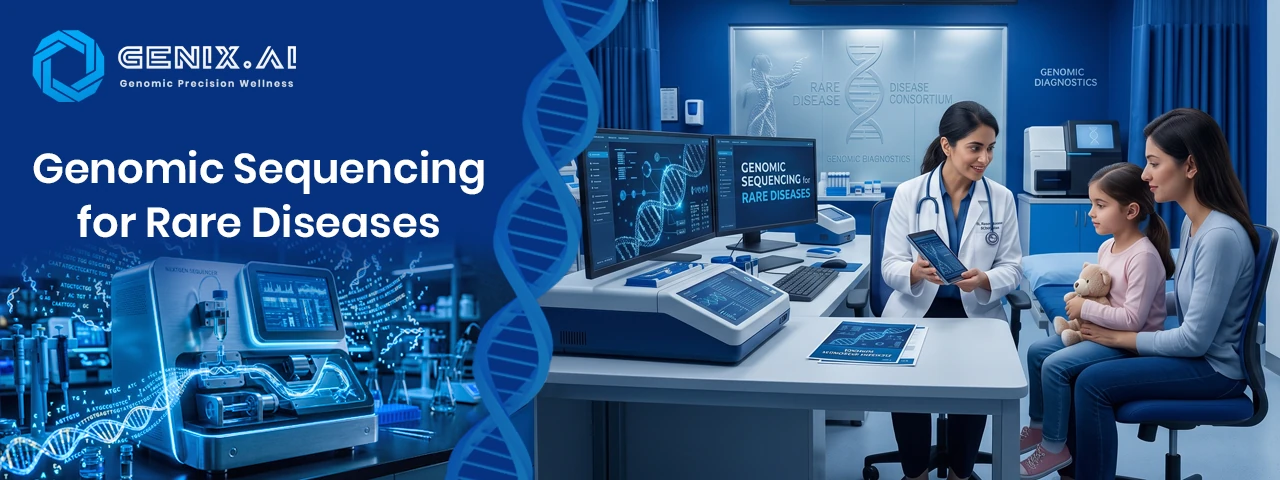
Imagine a child whose symptoms never quite fit a single diagnosis. Appointments pile up and tests keep coming back normal. Then the family is told to wait and see. For many people with a rare condition, that is how the story runs for years. Genomic sequencing for rare diseases is rewriting it by reading a person's DNA in one sweep instead of checking one gene at a time. This article explains how that works and what it can honestly promise. It also looks at where it still falls short.
Why Rare Disease Diagnosis Takes So Long
1. A rare problem with a huge footprint
There are more than 7,000 known rare diseases, and an estimated 300 million people live with one. Each condition is uncommon, so few doctors ever meet it twice. Most have a genetic cause, which means the answer often sits in the DNA long before anyone thinks to read it. frontiersin
2. The diagnostic odyssey
Families call the long road to an answer the diagnostic odyssey. Patient group surveys often put the average wait at around five years, and plenty of people wait longer. Meanwhile symptoms get treated one at a time while the real cause stays hidden. Our own piece on the diagnostic odyssey and whole genome sequencing tells the story from a family's side.
How Genomic Sequencing Changes the Search
1. From one gene to the whole genome
Older genetic testing for rare diseases looks at a single gene or a short list. Exome sequencing reads the protein coding portion, which is only around one to two percent of the genome. Whole genome sequencing reads roughly 3 billion letters of DNA, including the stretches between genes. That matters because some disease causing changes hide in noncoding regions or take the form of large structural rearrangements. For the technical detail, this guide to whole genome sequencing analysis goes deeper.
2. What the evidence shows
Researchers in the NHS 100,000 Genomes Project studied 4,660 participants from 2,183 families. About 25 percent received a confirmed diagnosis, and 14 percent of those would not have been diagnosed by other methods. In some categories, such as eye disorders and intellectual disability, the rate climbed to around 40 percent. That is encouraging, but it also means about three quarters of families still left without an answer. sequencing improves rare disease dx insights from 100000 genomes project +2
From Sample to Answer
1. The workflow
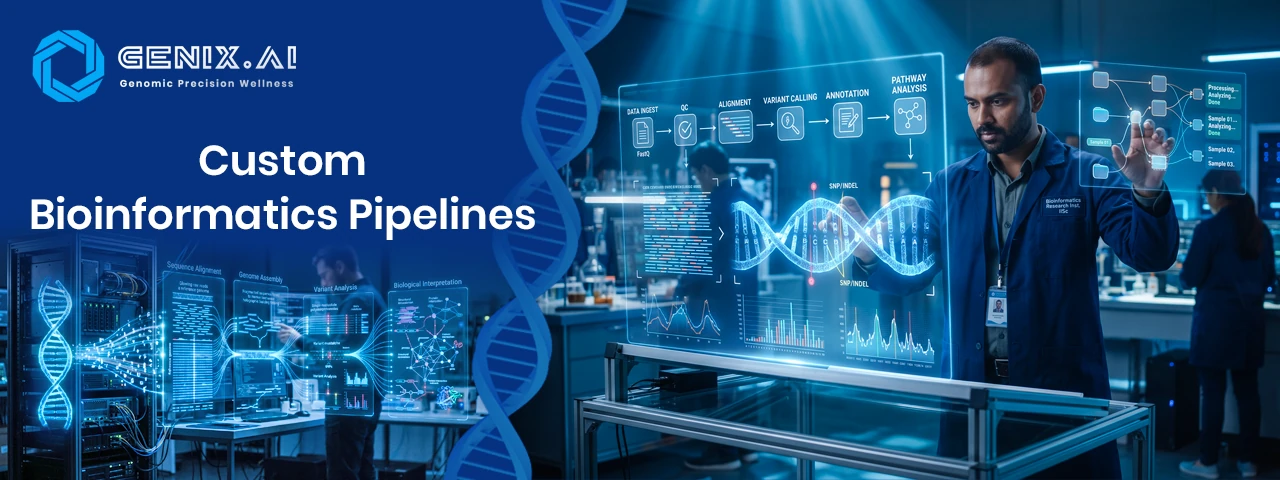
Blood or saliva sample → DNA sequencing → Alignment to reference genome → Variant calling → Annotation and filtering → Expert review → ReportMost of the work happens after the sequencer stops. A single genome carries several million variants and nearly all of them are harmless. The real skill lies in narrowing that pile down to the one or two changes that explain a patient's symptoms.
2. Why interpretation matters
Each variant is graded using professional guidelines from the American College of Medical Genetics and Genomics, from clearly harmful through uncertain to harmless. Good clinical annotation keeps that grading consistent and explainable, which is exactly what a doctor needs before acting on a result.
A Case That Shows What a Result Can Do
Knowing you are clear is also an answer
This example comes from the 100,000 Genomes work. In one family in the North East of England, there was worry that a 20 year old woman could also be affected by a disease in the family. Genome sequencing showed she had not inherited it, so she could stop regular and costly check ups. A diagnosis is not only about naming an illness. Sometimes the most valuable result is being told you are in the clear.
What Genomic Testing Cannot Do
Setting honest expectations
Not every search ends well. Genomes can throw up variants of uncertain significance, which are changes nobody can yet label harmful or harmless. Results also need a specialist to place them alongside symptoms and family history. Cost is easing, since the UK researchers noted that sequencing a genome now costs just a few hundred pounds, though interpretation takes expert time as well. Treat any screening report as the start of a conversation with a clinician and never as a verdict.
Conclusion
So where does this leave families and researchers? Whole genome sequencing has moved rare disease diagnosis from guesswork toward evidence, though it is not magic.Genix.ai supports that journey in two practical ways. For people who already hold sequencing files, its NGS data analysis service covers WGS and WES variant calling with ClinVar and gnomAD annotation. It then classifies findings using ACMG guidelines. The page lists WGS analysis at 30x from $400 per sample with a 5 to 7 day turnaround. For families who want a starting point, its genetic disorder screening panel looks across more than 750 genetic disorders. It is listed at ₹24,999 at the time of writing, with an option to add a 30 minute video consultation with a genetic counselor. The page is clear that this is a screening report and not a medical diagnosis. Both routes are meant to be shared with your doctor, and a free consultation is available if you want to talk it through.
FAQs
1. What is genomic sequencing for rare diseases?
It reads a person's DNA broadly to find the genetic change behind unexplained symptoms.
2. How is whole genome sequencing different from exome sequencing?
Exome sequencing reads the protein coding parts of DNA while whole genome sequencing reads nearly all of it.
3. Will sequencing always give a diagnosis?
No, in a large UK study about one in four families received one, so many still need further investigation.
4. Is a screening panel the same as a diagnosis?
No, a screening report points to variants worth discussing and a clinician makes any diagnosis.
5. Who should consider genetic testing for rare diseases?
People with unexplained symptoms or a strong family history are good candidates to raise it with their doctor.