Drug discovery used to start with a hypothesis and a lot of trial and error. Researchers would test compounds against a disease model, hope for a signal, and refine from there over years. Genomic data has changed where that process begins. Instead of guessing which biological pathway might matter, researchers can now look directly at genetic evidence linking specific genes to a disease before a single compound is even tested.
Abstract
Drug development has always been slow, costly, and full of guesswork. A drug would go into trials and help some patients while doing nothing for others, and often no one could explain why for a long time, sometimes never. Genomic data is starting to change that. It shows which genes are actually driving a disease and how different people are likely to react to a treatment, so pharma teams can make better decisions much earlier, before a drug even gets close to a trial. This blog looks at where genomic data is really making a difference in drug development right now.
Why Traditional Drug Development Struggled Without Genomics
For a long time, the biggest cost in pharma R&D was not manufacturing or trials. It was picking the wrong target early and not finding out until years and significant investment later.
1. Target Selection Without Enough Evidence
Choosing which gene or protein to target used to rely heavily on existing literature and lab experiments that took a long time to validate. Many programs failed not because the drug did not work chemically, but because the underlying target was never truly connected to the disease in the first place.
2. Trials That Treated Everyone the Same
Clinical trials historically grouped patients together and measured average response, which meant a drug that worked well for a genetic subgroup could still be judged a failure overall. That approach buried a lot of promising science simply because trial design was not built to notice who was actually responding.
Where Genomic Data Steps Into the Process
Genomics does not replace the traditional drug development pipeline, but it reshapes several of the earliest and most expensive steps in it.
1. Target Identification Backed by Genetic Evidence
Large scale genomic studies can show which gene variants are statistically linked to a disease across thousands or millions of people. When a target already has strong human genetic evidence behind it, the odds of that program succeeding later in clinical trials improve meaningfully compared to targets picked without that backing.
2. Biomarker Discovery for Smarter Trials
Genomic data helps identify biomarkers that predict how a patient is likely to respond to a specific treatment. Instead of waiting until after a trial to notice a subgroup responded better, researchers can use genetic markers to identify likely responders in advance and design the trial around that insight.
3. Patient Stratification in Clinical Trials
Grouping patients by genetic profile rather than just symptoms allows trials to test a drug on the population most likely to benefit from it. This does not just make trials more likely to succeed, it also protects patients who were never going to benefit from being exposed to a treatment that was never going to work for their biology.
The Bioinformatics Work Behind the Scenes
None of this genomic insight becomes usable without serious computational work sitting underneath it.
1. Processing and Interpreting Sequencing Data
Raw sequencing output has to be processed, quality checked and interpreted before it becomes something a research team can act on. This is where structured bioinformatics pipelines matter, since inconsistent processing at this stage can quietly undermine everything built on top of it later.
2. Molecular Modeling and Docking
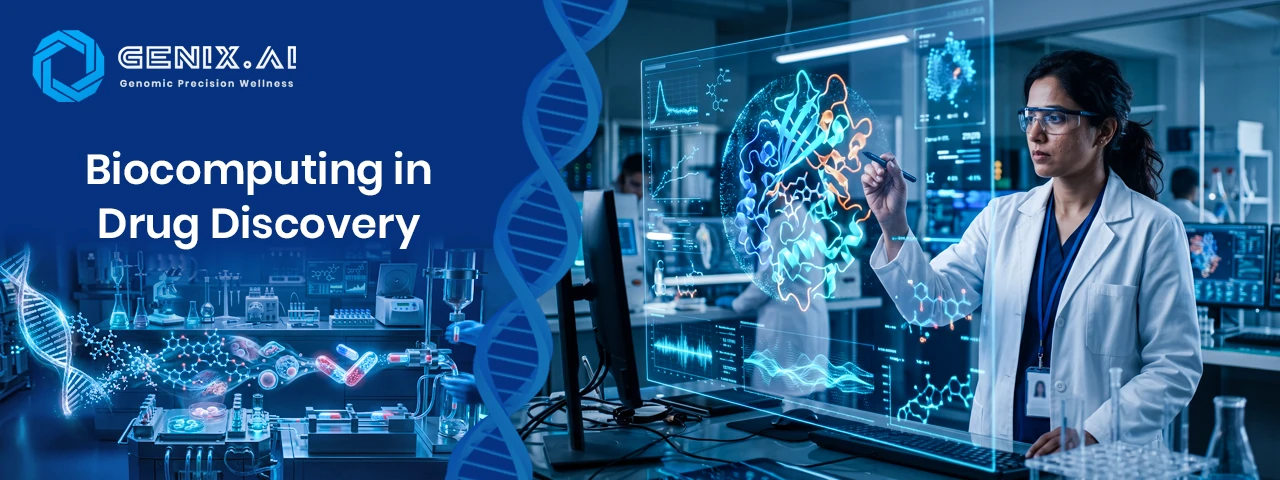
Once a genetic target is identified, computational tools like molecular docking help predict how a candidate compound might interact with that target at a structural level before any expensive lab synthesis begins. It will not replace wet lab validation, but it narrows the field of candidates worth testing in the first place.
Where This Still Has Limits
Genomic data is powerful, but it is not a shortcut around biology. A strong genetic association with a disease does not guarantee a safe or effective drug will follow from it, and computational predictions still need to be validated experimentally before anyone can trust them for a real patient. Population bias in genomic datasets is also a genuine concern, since studies historically skewed toward certain ancestries can miss important variations relevant to others. Responsible use of genomics in pharma research treats it as a way to focus effort more intelligently, not as a replacement for rigorous science.
What This Means for the Industry Going Forward
The pharma companies leaning into genomics early are not doing it because it is trendy. They are doing it because picking better targets and running smarter trials directly affects how much time and money it takes to get a working drug to patients. As genomic datasets keep growing and interpretation tools keep improving, this shift from broad guesswork to genetically informed research is only going to become more standard across the industry.
Conclusion
Genomic data is becoming one of the most practical tools pharma teams have for reducing risk earlier in the drug development process, from picking better targets to designing trials around the patients most likely to respond. Genix.ai supports this kind of work through its BioCompute service, offering molecular docking, sequencing analysis and pipeline development built specifically for pharma and biotech teams working with genomic evidence at scale.
FAQs
1. How does genomic data help drug discovery?
It provides genetic evidence linking specific genes to diseases, helping researchers choose better targets before testing begins.
2. What is patient stratification in clinical trials?
It means grouping trial participants by genetic profile so a treatment is tested on the patients most likely to actually benefit from it.
3. Does genomics replace lab testing in drug development?
No, it narrows down which targets and compounds are worth testing, but experimental validation is still required.
4. What role does bioinformatics play in pharma R&D?
It processes and interprets raw sequencing data so it becomes usable evidence for research decisions.
5. Is genomics driven drug discovery faster than traditional methods?
It can reduce wasted effort on poorly supported targets, which tends to shorten the overall path to a viable drug candidate.