Abstract
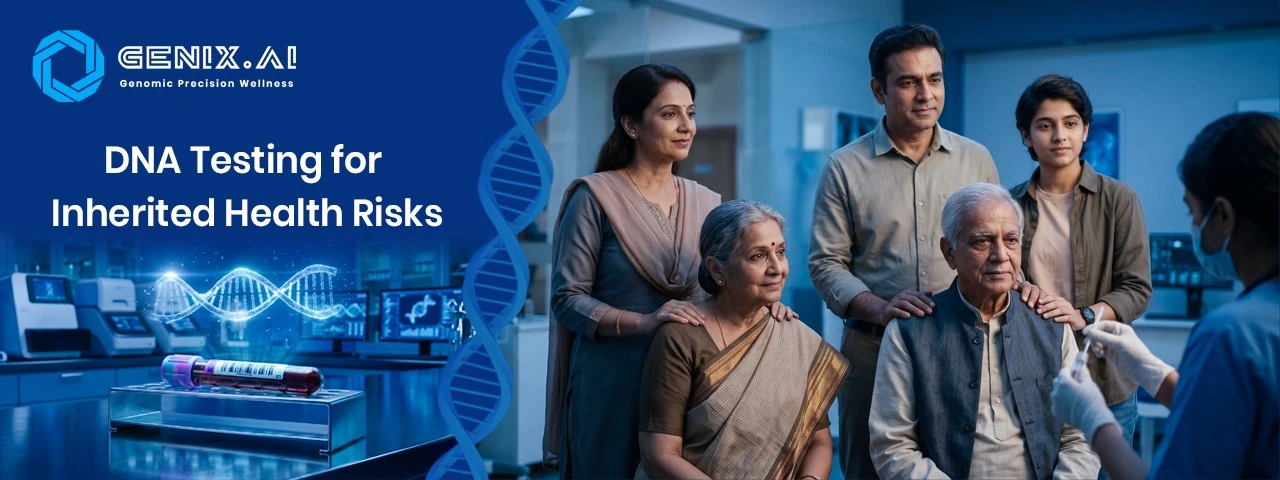
Some families seem to carry a story. A grandfather lost to an early heart attack, a cousin diagnosed with a condition nobody had ever heard of. People naturally wonder whether any of it is connected and whether it could reach them or their children. DNA testing can help answer that, though not quite in the way many expect. This blog explains what it can pick up, what it cannot, and how to read the results sensibly.
Inherited Risks and Genetic Conditions Are Different Things
1. Risks are tendencies
Some changes in your genes raise the odds of a health problem without guaranteeing it. Certain cancers and heart conditions work this way. Age, habits and environment still play a big part, so a higher risk is a reason to pay attention and not a prediction.
2. Genetic conditions are more direct
A genetic condition appears when a change in a gene disrupts how the body works, often from birth or early childhood. Most rare diseases have a genetic cause. Some only show up when a child inherits a changed copy from both parents, and this is where carriers come in. A carrier has one changed copy and usually feels perfectly well. If two carriers of the same recessive condition have a child, each pregnancy carries a 25 percent chance that the child inherits both changed copies. That figure comes from basic inheritance science, and it surprises many couples.
What DNA Testing Can Reveal
1. Inherited disease risk
A preventive screening looks at variants linked to inherited cancer and heart risk, along with chronic disease pathways. The point is not to frighten anyone. It is to help you and your doctor decide where closer monitoring makes sense. For a broader primer, this guide on whether DNA testing can detect hereditary diseases covers the basics.
2. Rare genetic disorders
Wider panels check for hundreds of disorders at once. One panel offered online covers more than 750 genetic disorders across metabolic and neurological conditions, along with conditions that involve several body systems. These suit people with unexplained symptoms or inconclusive workups, because rare conditions can take years to name. You can read more about how DNA data helps identify genetic disorders.
Carrier status and family planning
Carrier screening checks whether you or your partner carry changes linked to inherited conditions. It is most useful before a pregnancy, while there is still time to talk through options with a specialist. This explainer on carrier screening for couples walks through what to expect.
Testing children
The live site says its test suits children aged 2 and above with supervision. Anything that touches disease risk deserves a review with a healthcare professional. A parent’s guide to pediatric genomics is a gentle place to start.
Seeing It in Action
1. A simple example
Picture two healthy adults who each carry one changed copy of the same gene. Neither has ever had symptoms, and nothing in their family history hints at a problem. Without carrier screening they would have no reason to suspect anything. With it, they learn that each pregnancy has a 25 percent chance of a child with the condition, a 50 percent chance of a child who is a carrier like them, and a 25 percent chance of a child who inherits neither changed copy. That knowledge lets them speak with a genetic counselor before big decisions are made. This is an illustration of standard inheritance and not a real customer story.
2. Three approaches compared
Risk Screening: Risk screening helps identify whether a person may have an increased or decreased genetic tendency to develop certain health conditions. It is particularly useful for individuals with a strong family history of cancer or heart problems. However, the results indicate potential risks and do not confirm a diagnosis.
Rare Disorder Panel: A rare disorder panel examines specific genetic variants associated with rare diseases. It is suitable for individuals experiencing unexplained or complex symptoms that may have a genetic cause. The results can help identify variants linked to specific disorders, but interpretation and further evaluation by a specialist may be necessary.
Carrier Screening: Carrier screening determines whether a person carries certain genetic variants that could be passed on to their children. It is particularly useful for couples planning to start a family. However, being a carrier does not necessarily mean that the person will develop the associated disease; the implications for their children depend on the specific condition and the genetic variants inherited from both parents.
How the Process Works
From kit to report
Most people expect something more complicated than this.
Order --> Collect --> Analyse --> Receive --> DiscussIf you want the practical details, here is a guide on using a DNA testing kit at home.
What Your Results Do and Do Not Mean
1. A result is not a diagnosis
DNA testing supports awareness. It does not confirm that you have a condition, and the live site says plainly that its reports are not diagnostic. Some findings also come back as variants of uncertain significance, which means science cannot yet say whether they matter. For context on reliability, read how accurate DNA tests really are.
2. Bring in the right people
A doctor or genetic counselor can connect your report with your history and decide whether further tests make sense. This matters most with an unexpected result. This guide to DNA test results explained can help you prepare questions. Your genetic data is deeply personal too, so look for encryption and a clear way to request deletion.
Conclusion
Understanding inherited risk is less about fear and more about preparation. Genix.ai approaches this with at home saliva kits and a range of reports built for different questions. Its Shield report screens for inherited cancer and heart risk along with chronic disease pathways. The Rare panel covers more than 750 genetic disorders, and Match focuses on carrier screening for family planning. None of them diagnose disease, and the company says so plainly. Some plans include a 30 minute video consultation with a genetic counselor. You can browse the full range of DNA reports or download a sample report before you decide.
FAQs
1. Can DNA testing tell me which diseases I will get?
No, it shows inherited tendencies and never a certainty.
2. What is a genetic carrier?
A carrier has one changed gene copy, usually has no symptoms and can pass it to children.
3. Can children take a DNA test?
Yes from age 2 with supervision, and a doctor should review any sensitive findings.
4. Is a DNA test result a diagnosis?
No, it supports awareness and should be reviewed with a qualified doctor.
5. How is the sample collected?
You give a saliva sample at home, with no blood draw or clinic visit.