Abstract
Most of us grow up hearing things like "diabetes runs in our family" or "heart disease got your grandfather too." These conversations happen around dining tables and in doctor's waiting rooms, and they often leave people feeling like certain health outcomes are simply unavoidable. But what if there was a way to look deeper than family history and actually read what your genes say? DNA testing for hereditary diseases has moved from the realm of specialist clinics into everyday health decisions. This blog walks you through what hereditary disease testing actually means, which conditions it can flag, and how understanding your genetic blueprint changes the way you approach prevention and care.
What Does It Mean for a Disease to Be Hereditary?
A hereditary disease is one that passes from parent to child through genes. Every human cell contains roughly 20,000 to 25,000 genes, and sometimes a mutation or variation in one or more of those genes increases the likelihood of developing a particular condition. These variations are not random accidents; they are inherited patterns that travel through generations.
It is important to note the difference between a genetic predisposition and a guaranteed diagnosis. Carrying a gene variant associated with a condition does not automatically mean you will develop that condition. It means your risk may be elevated compared to someone without that variant, and that awareness creates an opportunity for earlier action.
The Difference Between Inherited and Acquired Conditions
Not all genetic conditions are inherited. Some arise from mutations that occur spontaneously during a person's lifetime due to environmental exposure or cellular errors. Hereditary disorders, by contrast, are encoded at birth. Conditions like sickle cell disease, cystic fibrosis, BRCA associated cancer risk, familial hypercholesterolemia, Huntington's disease, and certain forms of early onset diabetes or heart disease fall into this category. Genetic screening focuses on detecting these inherited patterns before symptoms ever appear.
How DNA Testing Works for Hereditary Disease Detection
A DNA test for hereditary diseases typically begins with a saliva or blood sample. That sample is then processed through next generation sequencing or targeted panel testing to analyze thousands of genetic markers at once. The resulting data is compared against known genetic variants linked to specific inherited conditions.
Types of Genetic Tests Used
There are several testing formats depending on the depth of information you need. A targeted panel test looks at a defined set of genes known to carry disease associations, for example a cardiac gene panel or a cancer predisposition panel. Whole exome sequencing goes broader, examining all protein coding regions of the genome. Whole genome sequencing captures the entire genetic code, providing the most comprehensive picture available.
Carrier screening is a specific category of genetic testing where both partners in a couple are tested to see whether they carry variants for conditions such as cystic fibrosis, spinal muscular atrophy, or thalassemia. Neither partner may show symptoms, but if both carry a recessive variant, there is a meaningful probability that a child could be affected.
What Conditions Can Genetic Testing Identify?
Hereditary disease testing has the ability to flag predispositions across multiple body systems. These include cardiovascular conditions such as hypertrophic cardiomyopathy and familial hypercholesterolemia, hereditary cancers including BRCA1 and BRCA2 variants linked to breast and ovarian cancer as well as Lynch syndrome associated with colorectal cancer, metabolic disorders including certain forms of inherited diabetes and hemochromatosis, neurological conditions such as Huntington's disease and earlyonset Alzheimer's associated variants, and rare single gene disorders that may not show up in standard diagnostic tests until significant damage has already occurred.
What Genetic Testing Can and Cannot Do
This is where many people misunderstand the purpose of genetic screening. A DNA test does not diagnose disease. It identifies inherited genetic variations that may increase risk. The clinical significance of many variants is still being studied, and risk percentages depend heavily on factors like ethnicity, lifestyle, and environmental context.
Genetic Risk Is Not Destiny
A person who tests positive for a BRCA2 variant does not have cancer. They have information that can prompt increased surveillance, lifestyle adjustments, and more focused conversations with their doctor. Similarly, a person who carries a familial cholesterol variant can work with a physician to manage their lipid profile proactively rather than discovering the problem only after a cardiac event.
This is the core value of genetic testing for hereditary diseases. It converts uncertainty into structured awareness and gives you the chance to act before the condition gains a foothold.
The Role of AI in Interpreting Genetic Data
Modern platforms do not simply return a list of genetic variants and leave interpretation to chance. AI powered genomic analysis layers population intelligence and clinical annotation over raw genetic data to help contextualise what a variant actually means for someone of a particular background. This is significant in a country like India, where many disease relevant variants are population specific and were historically underrepresented in global genomic research databases.
Who Should Consider a Hereditary Disease DNA Test?
Genetic screening is not only for people with obvious family histories of serious illness. It is increasingly relevant for anyone who wants to make more informed long term health decisions.
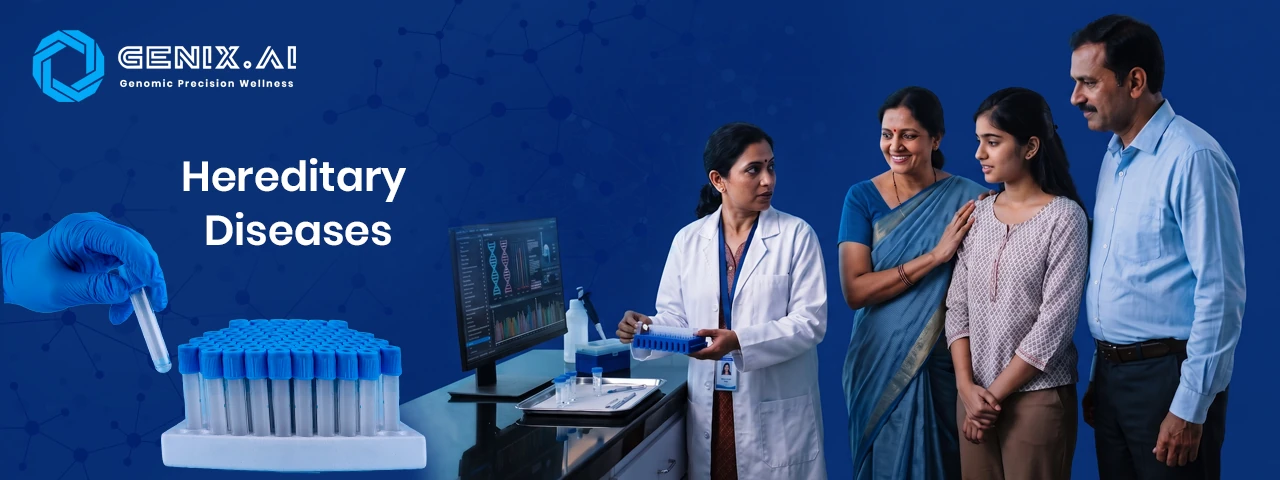
Those with a known family history of cancer, heart disease, diabetes, or rare conditions benefit most directly. But early stage preventive screening is also valuable for younger adults who have no symptoms and want to establish a proactive health baseline. Couples planning a family can use carrier screening to understand the inherited risk landscape before conception. Parents of children who show unusual or unexplained symptoms may find clarity through pediatric genetic testing that standard diagnostics miss.If your parents or grandparents experienced conditions that arrived earlier than expected or appeared in multiple generations, hereditary genetic screening is worth considering as part of your health picture.
Making Sense of Your Results
Receiving the results of a hereditary disease test can feel significant, and having the right support around interpretation matters. Results typically fall into categories: pathogenic variants with established clinical significance, variants of uncertain significance where more research is still needed, and negative results where no known disease associated variants were found.
A negative result does not eliminate all disease risk; it means no known hereditary variants were identified within the panel tested. Variants of uncertain significance require monitoring as scientific understanding evolves. Pathogenic findings are the ones that warrant direct clinical followup and, in some cases, family cascade testing to check whether relatives share the same variant.
Conclusion
Understanding whether your health risks have a hereditary component is one of the most valuable steps you can take toward informed preventive care. A DNA test for hereditary diseases does not replace medical consultation, but it adds a layer of precision that no routine health checkup can replicate. The knowledge that you carry a specific genetic variant gives you and your healthcare team the context to make smarter, earlier decisions about monitoring, lifestyle, and treatment if needed. For anyone considering this path Genix.ai offers hereditary disease screening and preventive genomics through products like Genix Shield and Genix Rare, designed to bring clinicalgrade genetic insights into accessible, structured reports.