Abstract
Most new drug ideas never make it to a pharmacy shelf. Roughly nine in ten candidates that reach human trials fail, and the ones that succeed usually spend 10 to 15 years on the road. Why does it take so long, and what actually happens along the way? This guide follows a medicine from the first question about a disease all the way to patient trials, so the drug development process finally makes sense to anyone.
Starting With the Right Question
1. What Target Identification Really Means
Every drug begins with a target, which is usually a protein that plays a part in a disease. If that protein misbehaves, a medicine that nudges it back into line could help. Target identification in drug discovery draws on patient genetics and lab studies to find these suspects. Sequencing has made the hunt far more precise, and next generation sequencing now lets researchers compare thousands of genes between healthy and affected people.
2. Checking That the Target Is Worth Chasing
Spotting a suspect is not the same as proving guilt. In validation, scientists switch a target off in cells or animals and watch what happens. If the disease behaviour changes, the target earns its place. If nothing changes, the project stops. That feels like a setback, but ending a weak idea early is far cheaper than ending it after years of work.
The Drug Discovery Stages That Follow
1. Finding Hits in a Crowd of Molecules
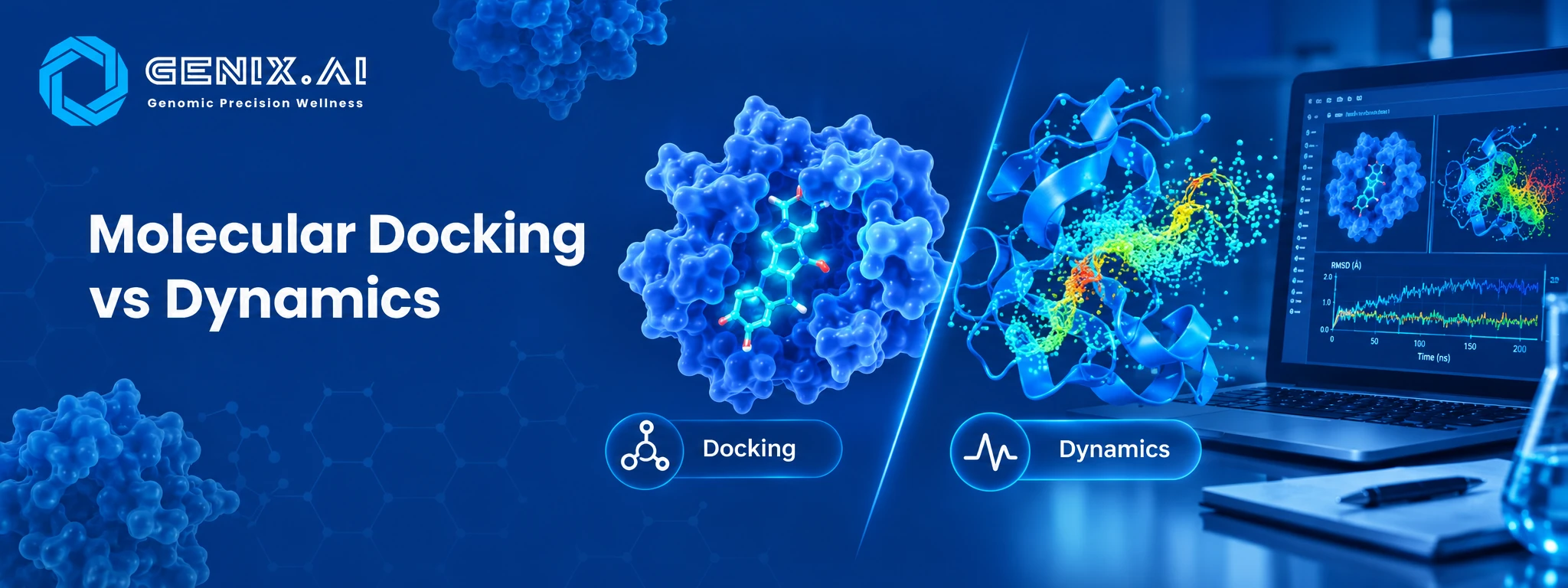
Next comes the search for a molecule that can bind to the target. Labs test enormous collections of compounds, and computers now do part of that work. Tools such as molecular docking predict how snugly a compound sits inside the target, so only the promising ones go to the bench. Compounds that show some activity are called hits.
2. Turning a Hit Into a Lead
A hit is rarely good enough on its own. It might bind weakly or affect proteins it should leave alone. Chemists tweak its structure over many rounds until it becomes a lead, which is potent and selective enough to justify further investment. Predictions of absorption and toxicity guide those tweaks. For a closer look at one area, see how docking helps in drug development for cancer diseases.
Proving Safety Before Humans Are Involved
1. Preclinical Testing
Before anyone swallows a tablet, the lead goes through laboratory and animal studies. Researchers look at how the body absorbs and clears the compound, which doses seem safe, and what side effects appear. The findings go to a regulator in an application that asks permission to begin trials in people. Regulators set strict rules for this work, so every step needs careful records. Only a fraction of leads get this far.
2. Early Phases and Why Many Drugs Stop
Phase 1 is mostly about safety, so groups are small and doses start low. Phase 2 is the first real test of benefit. This is also where many programmes end, since a drug can look safe and still fail to help.
3. Phase 3, Approval and Beyond
Phase 3 is the big comparison, often run across many sites. If the results hold up, the developer files for regulatory approval and reviewers go through the full evidence. Even then the story continues, because Phase 4 monitoring picks up rare side effects that only appear once many people use the drug.
4. Why So Many Candidates Fall Away
A compound that works beautifully in a dish or a mouse can behave very differently in a person, because human biology is more complex and more varied. Patients differ in their genes and in their other health conditions, and a drug may help one group while doing nothing for another. That gap between lab promise and patient reality explains why most failures show up in clinical trials rather than earlier.
A Case Study That Shows the Whole Journey
1. How Imatinib Went From Target to Treatment
Chronic myeloid leukaemia gives a clear example. Scientists found that most patients carry an abnormal fusion protein called BCR ABL, which drives the cancer. That became the target. A molecule that blocked it, later named imatinib, was developed, and early human trials began in the late 1990s. The US FDA approved the drug in 2001. Because the target was so clear and patients could be matched to it, the road was much shorter than usual.
2. What the Case Teaches
The lesson is not that every drug will follow this path. Few targets are as clean as BCR ABL. Still, imatinib shows what happens when a strong target meets the right patients, and it is why so much effort now goes into finding markers that tell researchers who is likely to benefit.
Where Data and Computing Are Changing the Road
1. Faster Early Stages
Virtual screening and safety prediction now happen before a lab mixes a single sample, which means fewer weak ideas reach the bench. Our article on challenges and future trends in drug development looks at this shift. Teams without in house computing can also outsource this kind of analysis, which lowers the barrier for smaller groups.
2. Smarter Matching in Trials
Trials work best when the right patients are enrolled. Genomic markers can sort patients into groups more likely to respond, which is what makes cases like imatinib so efficient. The piece on AI in clinical research and patient stratification shows how this is done today.
Conclusion
Drug development is slow because it has to be careful, but better data can remove some of the guesswork. Genix.ai supports that work through its Pharma and Biotech solution, which covers biomarker discovery and validation along with patient stratification for clinical programmes. Its platform follows four steps, from data integration to insight delivery. The BioCompute service handles protein modeling and molecular docking, with docking campaigns listed at five to ten days. If your team wants to see how genomic evidence can sit inside your own pipeline, you can request a demo.
FAQ's
1. What is the drug development process?
It is the journey from finding a disease target to testing a medicine in people and winning regulatory approval.
2. How long does drug development take?
It commonly takes 10 to 15 years from the first idea to an approved medicine.
3. What is target identification in drug discovery?
It is the step where scientists pick the protein or gene linked to a disease that a medicine could act on.
4. Why do so many drugs fail?
Most failures happen in clinical trials because a drug turns out to be unsafe or not effective enough in people.
5. What is the difference between preclinical and clinical stages?
Preclinical work happens in labs and animals, while clinical work tests the medicine in people.