Abstract
Doctors have always relied on symptoms, scans and lab results to figure out what is wrong with a patient, but that process has traditionally been slow and sometimes late. Artificial intelligence is starting to change that timeline in a real way, spotting patterns in medical data that even trained specialists can miss, and doing it fast enough to matter. This piece looks at how AI is actually being used in disease detection and patient care today, not as some distant future promise but as something already reshaping hospitals, labs and everyday health decisions.
The Shift Toward AI in Modern Healthcare
Healthcare has always generated enormous amounts of data, from imaging scans to genetic sequences to years of patient records, but humans alone can only process so much of it at a useful speed. Artificial intelligence in healthcare works by training algorithms on huge volumes of this data so they can recognize patterns that point toward disease, sometimes years before a person notices any symptoms at all. What makes this shift meaningful is not just speed. It is the ability to catch subtle signals buried in data that would otherwise slip past a busy clinician working through dozens of cases a day.
Why Early Detection Changes Outcomes
Most diseases are far easier to treat when caught early, and that holds true whether we are talking about cancer, heart disease or a rare inherited condition. AI disease detection tools are particularly good at flagging early warning signs in imaging or genetic data, giving doctors a head start that can genuinely change a patient's treatment path and long term outlook.
How AI Detects Disease
1. Medical Imaging and Pattern Recognition
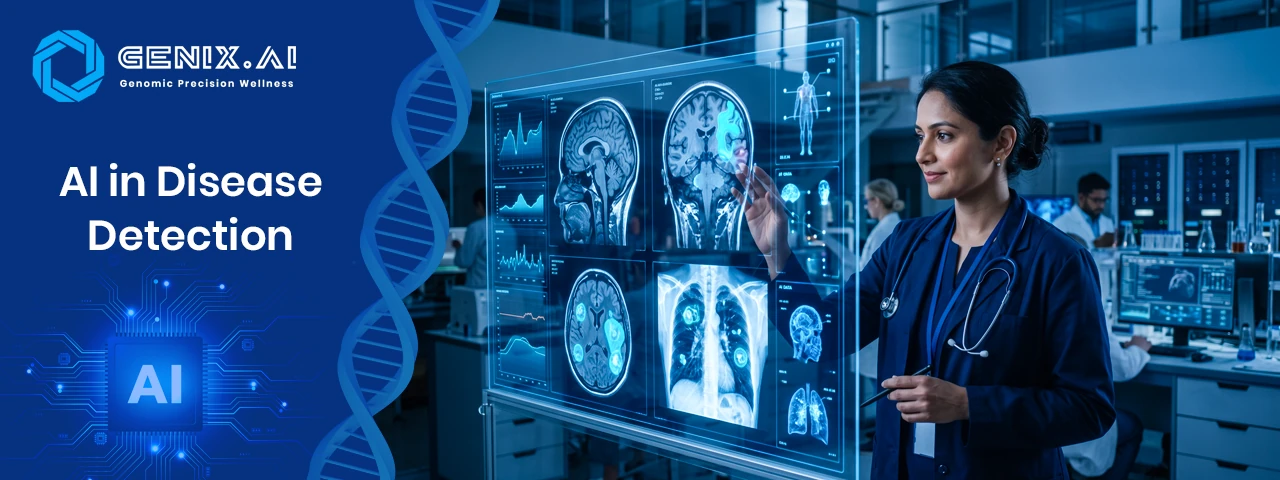
One of the clearest wins for AI so far has come from reading medical images. Algorithms trained on thousands of scans can identify tumors, fractures or abnormalities in x rays, MRIs and CT scans, often flagging areas that deserve a closer look from a radiologist. This does not replace the radiologist's judgment, but it does act as a second set of eyes that never gets tired or distracted after a long shift.
2. Genomic and Molecular Analysis
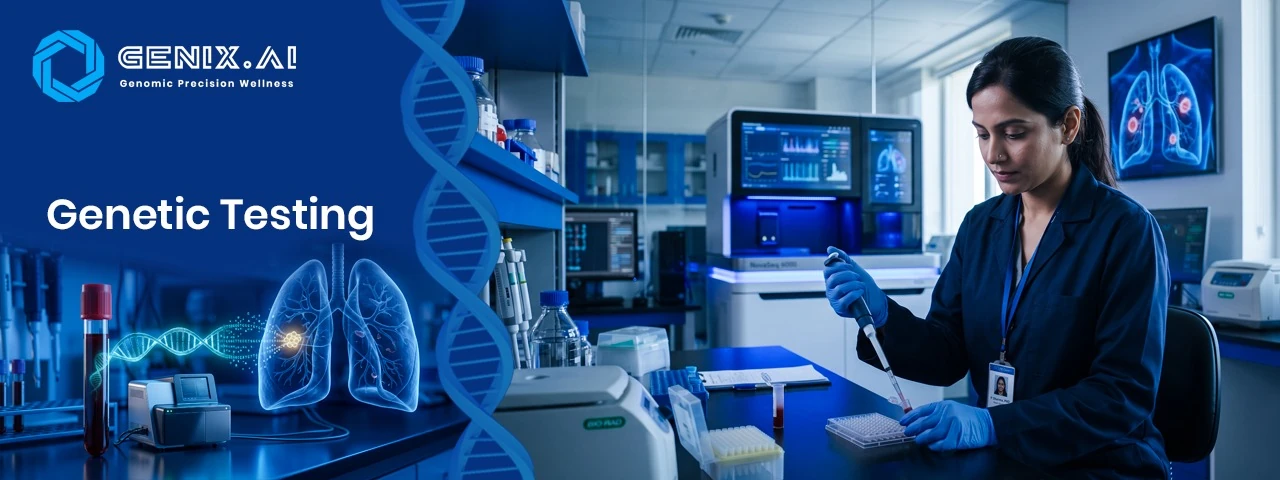
Beyond images, AI plays a growing role in reading genetic data itself. Sequencing a person's DNA generates a massive amount of raw information, and AI assisted interpretation helps identify which variants actually matter clinically versus which ones are just background noise. This kind of variant prioritization has become essential as genetic testing gets cheaper and more widely used, since the bottleneck has shifted from generating data to making sense of it.
3. Predictive Risk Modeling
AI models can also combine multiple data sources, genetic markers, family history, lifestyle factors and lab results, to estimate a person's risk of developing certain conditions before any symptoms show up. This predictive approach is especially useful for hereditary diseases, where knowing a risk profile early can shape screening schedules and preventive choices.
AI in Patient Care Beyond Diagnosis
1. Personalized Treatment Planning
Once a condition is identified, AI can help tailor treatment to the individual rather than relying purely on population averages. Pharmacogenomics, the study of how a person's genes affect their response to specific drugs, uses AI driven analysis to predict which medications are likely to work well and which might cause adverse reactions, reducing some of the trial and error that has long been part of prescribing.
2. Remote Monitoring and Continuous Care
AI powered tools also extend care beyond the clinic walls. Wearable devices and mobile health apps can track vital signs continuously, feeding data into algorithms that flag concerning trends before they become emergencies. For patients managing chronic conditions, this kind of ongoing monitoring adds a layer of safety that periodic checkups alone cannot provide.
3. Reducing Administrative Burden
It is easy to focus only on diagnosis and treatment, but AI is also quietly reducing the paperwork and manual review that eats into clinicians' time. Automated documentation, faster lab result triage and streamlined reporting all free up doctors to spend more time actually talking with patients instead of buried in charts.
Challenges That Still Need Attention
1. Bias and Population Representation
AI models are only as good as the data they learn from, and if that data underrepresents certain populations, the resulting predictions can be less accurate or even unfair for those groups. This is a real and ongoing concern in genomics and healthcare AI broadly, since historical medical data has not always reflected the full diversity of patients being treated today.
2. Explainability and Clinical Trust
Doctors are understandably cautious about tools that produce a result without showing their reasoning. For AI to be genuinely useful in clinical settings, its outputs need to be explainable enough that a physician can understand why a particular finding was flagged, rather than just trusting a black box result blindly.
Conclusion
The direction here is fairly clear. AI is not replacing doctors, but it is giving them sharper tools to catch disease earlier and personalize care more precisely than was possible even a decade ago. Genix.ai works in this exact space through its genomic intelligence platform which turns complex genomic and phenotypic data into structured, explainable outputs designed to support decision making rather than replace the clinician making the final call. As sequencing becomes more common, the real value increasingly lies in how well that data gets interpreted, and that is where thoughtful AI integration makes the biggest difference.
FAQs
1. Can AI actually diagnose diseases on its own?
No, AI tools assist by flagging patterns and risks, but a qualified clinician still makes the final diagnosis.
2. Is AI used in genetic testing as well as imaging?
Yes, AI helps interpret both medical images and genomic data, including prioritizing which genetic variants are clinically relevant.
3. Does AI in healthcare replace doctors?
No, it supports clinical decision making by processing large amounts of data faster than a person could alone.
4. How does AI help with personalized treatment?
It analyzes genetic and clinical data together to suggest which treatments or medications are more likely to work for a specific patient.
5. What is the biggest challenge with AI in healthcare right now?
Ensuring the underlying data represents diverse populations fairly and that AI outputs remain explainable to clinicians.