Abstract
A single human genome holds about 3 billion letters and several million differences from the reference. Somewhere in that pile may sit the one change behind a child's unexplained illness, and no person could ever find it by eye. That is where bioinformatics steps in. This article shows how bioinformatics in rare disease research and diagnosis really works. It also covers what it has already achieved and where it still needs careful human hands.
Why Rare Diseases Are a Data Problem
1. Too few patients and far too much DNA
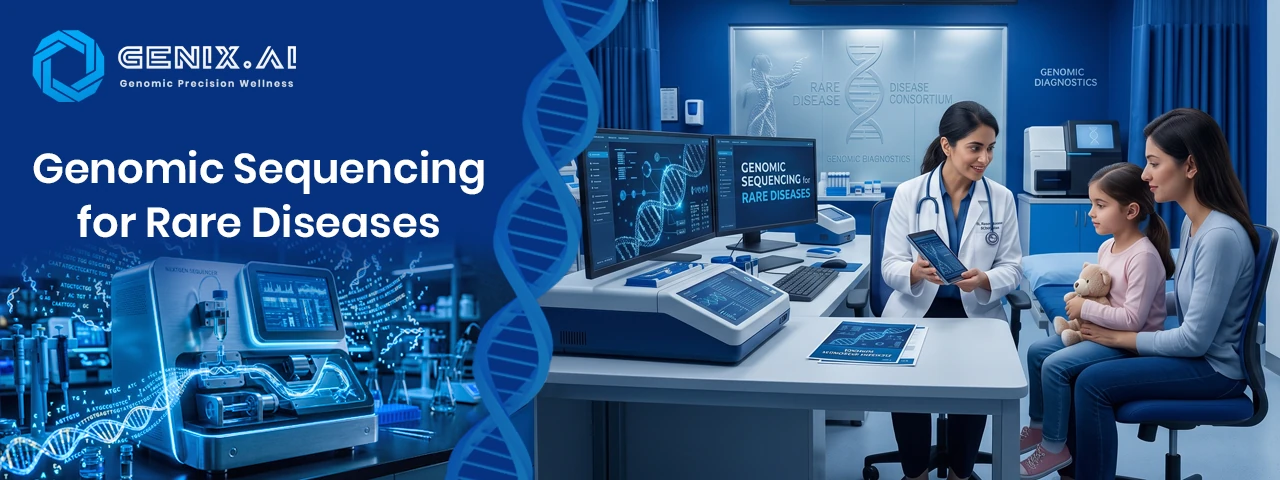
There are more than 7,000 known rare diseases. Each touches only a small number of people, so most doctors never see the same one twice. The genome, meanwhile, offers millions of candidate changes. Put those two facts together and you get a classic data problem. frontiersin
2. What bioinformatics actually does
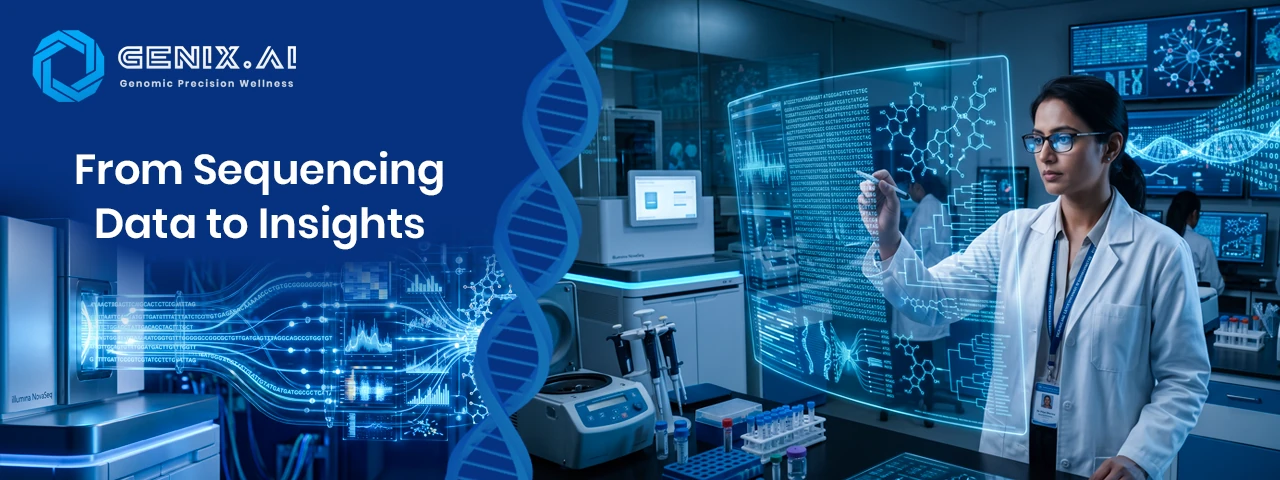
Think of it as software and statistics that turn raw sequencer output into something a clinician can use. People also call this computational genomics, and if you wonder how it differs from its cousin, here is a short explainer on computational biology versus bioinformatics. In rare disease genomics it matters at every step after the sequencing machine finishes, which is where most of the thinking happens.
How the Rare Disease Workflow Runs
From raw reads to a report
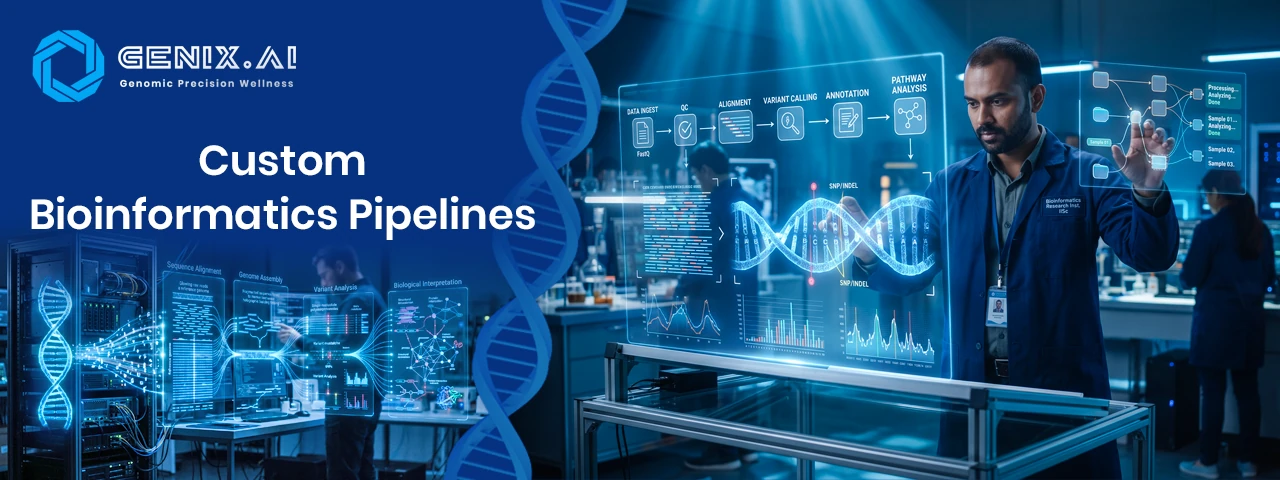
Raw reads → Quality control → Alignment → Variant calling → Annotation → Filtering and ranking → Expert review → ReportEach arrow is a piece of software. Skip one and the answer gets shakier.
3. Where the narrowing happens
Annotation attaches known information to every variant, such as how often it appears in the general population and what earlier studies say. Common variants are usually set aside, because a severe rare disease seldom comes from something many healthy people carry. Patient symptoms, often written as standard Human Phenotype Ontology terms, then help rank what is left. Finally each survivor is sorted into one of five tiers under American College of Medical Genetics and Genomics guidelines, from pathogenic to benign. Our guide to DNA sequencing data analysis walks through these steps in more detail.
What the Evidence Shows
1. Diagnosis at scale
In the NHS 100,000 Genomes Project, researchers studied 4,660 participants from 2,183 families, and 25 percent obtained a confirmed diagnosis. A share of 14 percent of diagnoses came from combining research and automated approaches, which uncovered variants that exome testing covers poorly. That is real progress. It also means most families still left without an answer.
2. Discovery at scale
Bioinformatics does not only diagnose. Burden testing across 57,000 genomes in the same project found three new disease genes and 19 new associations. Burden testing simply asks whether a gene carries more rare damaging variants in patients than chance would predict.
A Case Study in Finding the Needle
By age three, Nic Volker had been through more than 100 surgeries for a severe bowel disease that nobody could explain. Doctors at the Medical College of Wisconsin then sequenced the protein coding regions of his genes. They identified a mutation in the XIAP gene, which had not been among the more than 2,000 candidate genes considered beforehand. The finding pointed toward a cord blood transplant that his team would not have considered without a firm diagnosis. At the time of reporting, his bowel disease had not returned. The lesson is that a single letter among 3 billion became visible only because analysis software and clinicians worked together. scientists and physicians use genetic sequencing to identify and treat unknown disease +3
Challenges Worth Knowing About
1. Population bias
Many reference datasets come from a narrow range of ancestry groups. A variant that looks rare and suspicious in one dataset may be perfectly common in another population. Without population aware analysis, patients from underrepresented backgrounds can receive wrong or uncertain answers. Our page on bias and population intelligence explains why this deserves attention.
2. Uncertainty and the human in the loop
Plenty of variants land in the uncertain category, and software cannot always settle them. Experts weigh the evidence against symptoms and family history. The best systems show their reasoning so a reviewer can agree or disagree.
Conclusion
Rare disease answers rarely come from sequencing alone. They come from the careful analysis and expert judgement that follow it. Genix.ai focuses on that interpretation stage. Its bioinformatics solution for NGS teams starts from a VCF file and runs automated annotation. Optional manual curation follows before a one click PDF report is generated, and it fits alongside an existing pipeline. Its AI clinical annotation platform uses AI to prioritise rather than to diagnose, keeps every output explainable and leaves human experts in control. Teams that want the analysis done for them can look at the NGS data analysis service, which covers WGS and WES variant analysis with ACMG classification and lists 30x WGS at $400 per sample with a 5 to 7 day turnaround. That page also notes that its clinical genomics platform integrates South Asian population frequency data. If this sounds like your workflow, you can request a demo.
FAQs
1. What is bioinformatics in rare disease research?
It is the use of software and statistics to find disease causing DNA changes inside large genomic datasets.
2. How is bioinformatics for genetic disorders different from sequencing?
Sequencing reads the DNA while bioinformatics makes sense of what was read.
3. Can software diagnose a rare disease on its own?
No, software ranks and annotates variants and trained experts make the final interpretation.
4. Why does ancestry matter in rare disease genomics?
A variant that looks rare in one dataset can be common in another population, which changes how it is judged.
5. What file does variant interpretation usually start from?
It typically starts from a VCF file produced after variant calling.