Abstract
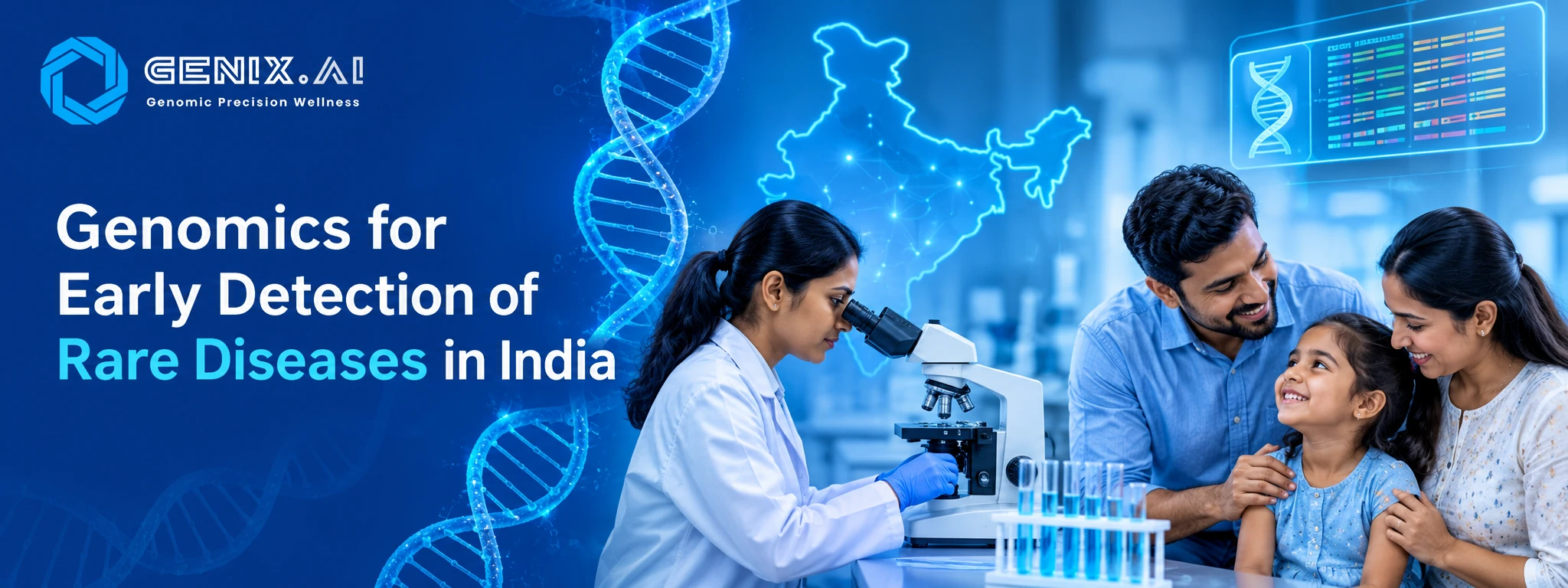
In India, a rare disease is not so rare once you add up the numbers. One widely quoted estimate puts the count of people living with a rare genetic condition near 70 million, yet many families still hear the same sentence from doctors, which is that nobody is sure what this is. That silence costs time, and in childhood conditions time matters a great deal. This article looks at why rare diseases in India go undetected, how genomics can bring answers earlier, and what families and clinicians can realistically do today.
Why Rare Diseases in India Add Up to a Big Problem
1. Small Conditions, Large Numbers
A single rare disease touches only a few people. But around 7,500 rare diseases have a known molecular basis worldwide, and nearly eight in ten are thought to have a genetic cause. India is the most populous country on earth, so even a small share becomes a very large number of people. The ICMR has set up a national registry for rare diseases, which shows the problem is being taken seriously.
2. Why India Faces a Particular Challenge
India has about 4,600 population groups, and several thousand of them are endogamous, which means people marry mostly within the group. Marriages between relatives are also common in some communities. Both patterns make recessive conditions more likely, because two carriers meet more often than chance would suggest. Add limited awareness, few testing labs and no single complete patient registry, and many families wait years for an answer. Blood disorders and lysosomal storage diseases feature prominently, along with neuromuscular and immune conditions.
How Genomics Helps Detect Rare Diseases Earlier
1. From Symptoms First to DNA First
The old route starts with symptoms. A doctor guesses, orders a test, rules one thing out and tries again. Genomics flips that order. By reading many genes at once, it can point toward a cause before the guessing game runs its course. If you want the basics, our guide to what next generation DNA sequencing is is a good place to begin, and the story of the diagnostic odyssey shows why the wait is so hard on families.
2. What Early Detection Changes
Finding a condition early lets doctors start supportive care before damage builds up. It can spare a family repeated hospital visits and unclear answers. It also opens the door to testing relatives, which matters a lot when a recessive condition runs in a family.
A Case Study From Jammu and Kashmir
A Village That Waited Generations
Researchers in Jammu and Kashmir studied families in a village where a skeletal disorder had gone unnamed for many generations. Joints such as ankles, knees and elbows became enlarged, and local facilities for imaging were limited. Whole exome sequencing of two family pedigrees found changes in a gene called WISP3, which causes progressive pseudorheumatoid dysplasia. The families were highly consanguineous and the pattern was recessive.
With a name for the condition, genetic counselling and better management could finally follow. The lesson is simple. A sequencing result can turn a mystery into a plan, even where clinical resources are thin.
From Sample to Answer
The Workflow in Plain Steps
Most people picture a lab machine spitting out a diagnosis. Reality has more steps, and the final ones involve people.
Family history and symptoms noted -> Saliva or blood sample collected -> DNA sequencing -> Variant analysis and classification -> Clinician and genetic counsellor review -> Care plan and family testingInterpretation is where many projects stall. Our next generation sequencing analysis page describes annotation and ACMG classification, which is how variants get sorted from harmless to likely harmful. Reference data from Indian populations matters here as well, because a change that is common in one group may be rare in another. The clinical genomics platform mentioned on that page notes South Asian population frequency integration for this reason.
What Families and Clinicians Can Do Today
1. Practical Next Steps
If you suspect something runs in your family, a good first move is simply writing down who had what and at what age. A genetic counsellor can then help choose the right test, since panels, exomes and genomes answer different questions. Bring any result back to a clinician rather than reading it alone.
2. Limits and Honest Expectations
Genomics is not a magic key. Most rare diseases still have no specific therapy, and a negative result does not close the case. Privacy deserves a question too, so ask how your data is stored and shared. For wider background, read our posts on rare diseases in India that need government attention and the rare disease burden and genomic intelligence.
Conclusion
Genomics will not lift the burden of rare diseases in India overnight, but it can shorten the wait for answers. Genix.ai works on both sides of that problem. For families, a rare genetic disorder panel screens for more than 750 genetic disorders, with a carrier screening test for couples and a pediatric genomics report for children alongside it. These support preventive health and do not replace a diagnosis, so results should be discussed with a doctor. For hospitals and labs, the NGS data analysis service takes exome and genome files from variant calling to ACMG classification, and the Hospitals and Health Systems solution is built for clinical teams. You can request a demo to talk it through.
FAQ's
1. How many people in India live with a rare genetic disease?
Estimates run to about 70 million, though exact figures are uncertain without a complete national registry.
2. Why are some rare diseases more common in certain Indian communities?
Marrying within the same group or among relatives raises the chance that two carriers have a child together.
3. Can a DNA test detect a rare disease early?
In many cases yes, though a doctor must review the result and some conditions will still be missed.
4. Is carrier screening the same as testing a child?
No, carrier screening checks parents for hidden gene changes while child testing looks at the child’s own DNA.
5. Should I see a doctor before ordering a test?
Yes, a doctor or genetic counsellor can pick the right test and explain what the result means.