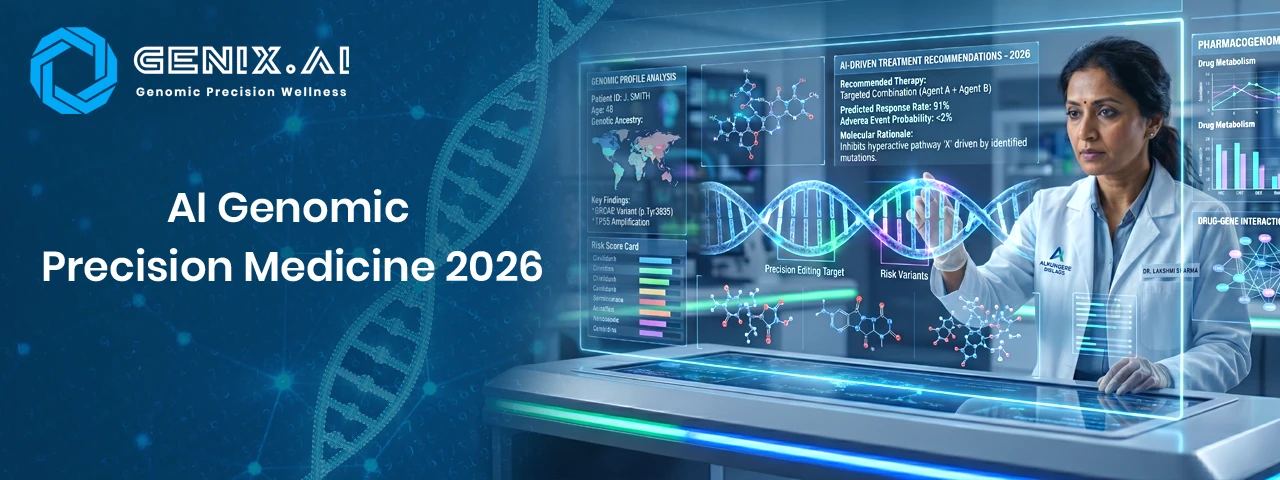
Genomic medicine has entered a more serious phase in India. It is no longer seen only as a research subject or a specialist test. Patients, clinicians, diagnostics teams, researchers and healthcare leaders are asking how complex genomic data can become clearer, safer and more useful for care decisions.
This is where AI in genomics is becoming important. The role of AI is not to replace medical judgement. Its value lies in reading large biological datasets, connecting them with clinical information and supporting structured interpretation.
In 2026, the discussion is moving from “Can AI analyse genomes?” to “Can it make genomic intelligence easier to use responsibly?” India’s genomic and biomedical data initiatives have also brought this subject into wider health conversations.
ABSTRACT
Genomic medicine in India has crossed a quiet but significant threshold. What was once confined to research labs and specialist clinics is now a live conversation in hospitals, diagnostic centres, and healthcare boardrooms. The question has shifted not whether AI can analyse genomic data, but whether it can do so in a way that clinicians, counsellors, and patients can actually trust and act on.
This 2026 state of the industry report examines how AI is changing the way genomic data is interpreted, reported, and governed across India's complex and diverse healthcare landscape. It explores the move from isolated bioinformatics tools to connected genomic intelligence platforms where variant prioritization, clinical report structuring, pharmacogenomic review, and human oversight sit within one traceable workflow.
A central theme throughout this report is population awareness. India's genetic diversity demands more than global reference models. Genomic intelligence that serves Indian patients must combine global scientific knowledge with locally meaningful interpretation and that balance requires both technical rig our and clinical humility.
The report also addresses governance, because genomic data is not ordinary health information. It is personal, heritable, and long lasting. Responsible AI adoption in genomic precision medicine means audit trails, consent aware workflows, and a clear commitment to keeping medical judgement where it belongs with the clinician, scientist, and care team.
Genomic Data Is Becoming a Decision Support Layer
Genomic data by itself is not the final answer. It needs interpretation, clinical relevance and expert review before it can support care.
Every genome carries many possible signals. Some may relate to inherited risk, therapy response, rare conditions or uncertain findings. Interpretation often demands review across clinical records, scientific literature and variant databases.
This is where artificial intelligence genomics workflows are gaining attention. AI enabled systems can help organise complex information, highlight patterns and support review ready outputs.
For Indian healthcare, this matters because precision medicine must work across diverse populations, care access levels and clinical pathways. A responsible genome AI approach should support doctors and scientists without creating overconfidence in automated outputs.
Key areas being evaluated include:
- Variant prioritisation
- Disease risk interpretation
- Pharmacogenomic review
- Clinical report structuring
- Research cohort analysis
The industry shift is not only about faster analysis. It is about explainable genomic intelligence that trained professionals can review with confidence.
Precision Medicine AI Is Moving from Silos to Platforms
Precision medicine cannot work well when data remains scattered. The industry is moving towards connected systems that bring genomic, clinical and operational data into one usable workflow.
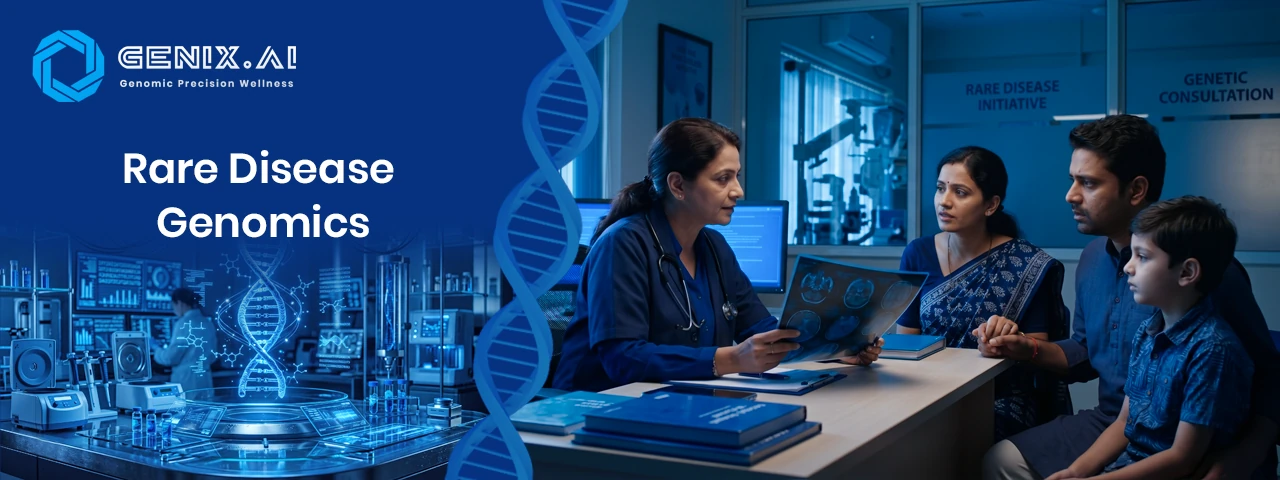
A plat formled approach matters because genomics involves many teams. A sample may pass through lab operations, bioinformatics, interpretation, reporting, counselling and followup. When each step sits in a separate tool, decision making can become slow and inconsistent.
A connected AI healthcare platform may help teams view this journey more clearly. It can bring data ingestion, analysis, interpretation, reporting and governance into a shared environment.
An AI platform for healthcare in genomics should be assessed for clinical usability, data traceability, governance controls, transparent outputs, human review points and population aware analysis.
This is why platform thinking is becoming more important than isolated AI tools.
India Needs Population Aware Genomic Intelligence
India’s genetic diversity makes genomic medicine both valuable and complex. Any system used in India must be sensitive to local variation, data quality and clinical realities.
Many genomic models have historically depended on datasets that may not fully reflect South Asian diversity. This can affect interpretation, especially when variant meaning depends on ancestry, population frequency or disease background.
In India, a useful genomic intelligence platform should support population aware analysis. It should help researchers and clinicians work with relevant reference data, evolving evidence and locally meaningful interpretation layers.
Genomics is a global science, but Indian healthcare needs systems that can combine global knowledge with India specific signals. That balance is essential for responsible precision medicine AI adoption.
For patients and families, the idea is clear: a genetic result becomes useful when interpreted within the right clinical and population frame.
AI Is Changing How Genomic Reports Are Built
A genomic report is where complex science meets the care journey. If the report is unclear, even strong analysis can lose value.
AI supported reporting is becoming a key part of genome AI workflows. The aim is not to create generic reports. The aim is to make reporting more structured, consistent and easier for professionals to review.
A good genomic report should clearly show what was analysed, what was found, why it may be relevant, what remains uncertain and what needs clinician review.
For India, this is important because healthcare conversations often involve patients, family members, doctors and counselors. A report may need to support a specialist review while remaining clear enough for guided patient discussion.
AI can assist by organising findings and improving consistency across report sections. However, final interpretation must remain clinically governed. In genomic precision medicine, clarity should never come at the cost of caution.
Governance and Human Review Are Becoming Central
AI in healthcare cannot be treated like general software. When genomic data is involved, governance and expert review become even more important.
Genetic information is personal, long lasting and relevant beyond one individual. Global health guidance continues to emphasis safety, ethics, equity, privacy and oversight in AI for health.
These concerns are directly relevant to artificial intelligence genomics because genomic outputs can influence care, research and family level conversations.
A responsible AI healthcare platform should include access controls, audit trails, consent aware workflows, data protection measures and clear accountability for human review.
For Indian organisations, this is not only a compliance issue. Trust will shape adoption when data is handled carefully, and interpretation is not left to an opaque algorithm.
The future of genomic precision medicine is not about machines replacing specialists. AI supports the process, while clinicians, scientists, counsellors and care teams remain central to judgement.
A balanced precision medicine AI model should support clearer reporting, consistent interpretation workflows, stronger governance and ongoing learning from validated evidence.
Conclusion
AI is redefining genomic precision medicine by changing how data is organised, interpreted, reviewed and communicated. The shift is not about replacing expertise. It is about helping healthcare teams move from raw genomic information to clearer intelligence.
For India, this matters because genomic medicine must serve a diverse population and a complex healthcare ecosystem. AI in genomics can support this shift when it is built around transparency, governance, clinical review and population aware interpretation.
The real opportunity lies in connected genomic intelligence. A platformled approach can bring analysis, reporting, governance and clinical workflows together for informed care decisions.
To explore how a connected approach can support this shift, visit the Genomic Intelligence platform.