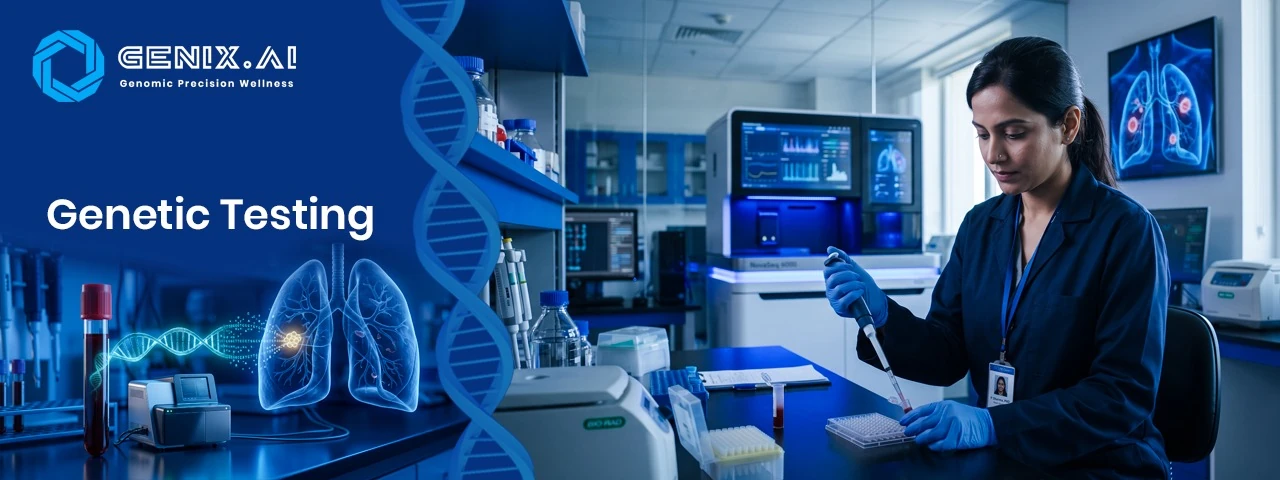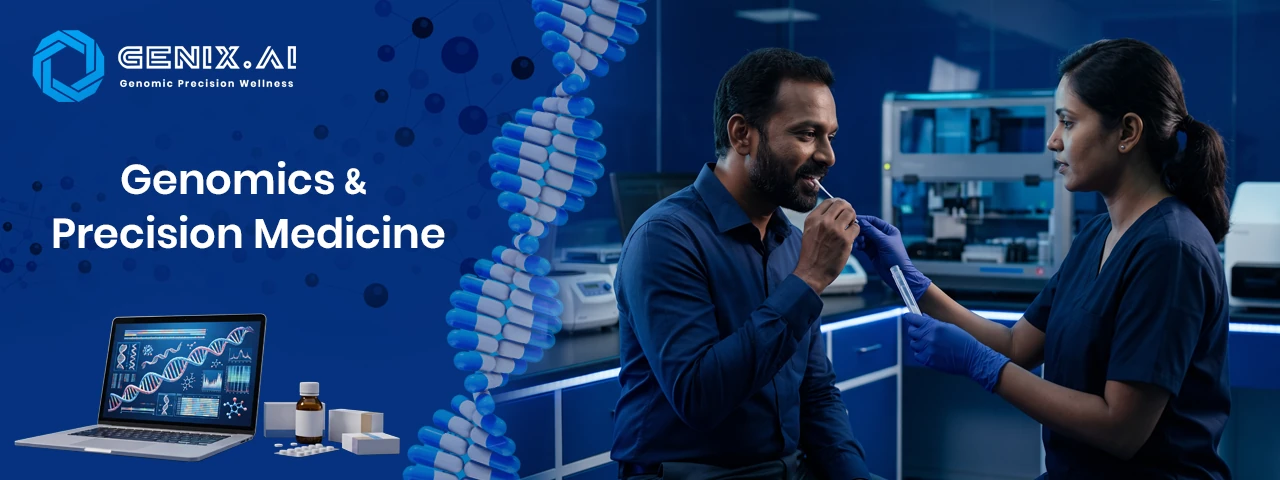
Clinical genomics used to live mostly in research papers and specialist labs. Now it shows up in far more ordinary moments, a cancer patient whose treatment plan changes based on a tumor's genetic profile, a newborn screened for a rare inherited condition, a family finally getting an answer after years of unclear symptoms. This piece explains what clinical genomics actually involves, how it powers precision medicine and diagnostics in practice, and what hospitals and labs should look for as they adopt it. The shift is not happening in some distant future either, it is already reshaping how clinicians make decisions today.
Abstract
Not long ago, clinical genomics felt like something reserved for research papers and specialist conferences, far removed from an actual hospital visit. That is changing fast. A cancer patient's treatment plan now sometimes hinges on the genetic makeup of their tumor. A newborn gets screened for a rare condition before symptoms even show up. A family finally gets an answer after years of tests that led nowhere. This piece walks through what clinical genomics actually looks like in practice, how it shapes precision medicine and diagnosis in real hospitals and labs today, and what those institutions should be paying attention to as they bring it into everyday patient care.
What Clinical Genomics Actually Involves
Clinical genomics is the practice of using a patient's DNA sequencing data to guide real medical decisions, not just academic research. It takes raw genomic information and turns it into something a clinician can use, whether that means identifying a disease causing variant, understanding inherited risk, or selecting the right drug for a specific patient.
From Raw Sequence to Clinical Insight
A sequencing machine only produces data. The real clinical value comes from the steps after that, variant calling, annotation, filtering out irrelevant findings, and connecting what remains to actual clinical evidence. Clinical genetic testing depends heavily on this interpretation layer being accurate, consistent, and fast enough to matter for patient care.
How Clinical Genomics Powers Precision Medicine
Precision medicine starts with a simple idea, that treatment should be based on the individual patient rather than a population average. Clinical genomics is what makes that idea practical. A patient's genetic profile can influence which cancer therapy is likely to work, how their body metabolizes certain drugs, and which preventive screenings actually make sense for them.
Matching Treatment to the Patient, Not the Average
This is where personalized healthcare moves from a marketing phrase to something clinically real. Two patients with the same diagnosis can have very different underlying genetic drivers, and clinical genomics gives physicians a way to tell them apart before choosing a treatment path, rather than relying purely on trial and error. Pharmacogenomics is a good example, since knowing how a patient's body is likely to process a drug can prevent an adverse reaction long before it happens.
Clinical Genomics in Diagnostics
Genomic diagnostics has become especially important for conditions that are hard to identify through symptoms alone. Instead of a long series of tests trying to rule things out one by one, sequencing based diagnostics can often point directly toward a likely genetic cause, shortening what patients and families sometimes call the diagnostic odyssey.
Rare Disease and Hereditary Conditions
For rare and hereditary conditions in particular, clinical genomics often provides the first concrete answer a family has received after years of uncertainty. Carrier screening, hereditary cancer panels, and pediatric genomic testing all rely on the same core capability, turning complex sequencing data into a clear, clinically actionable result.
Why Interpretation Matters as Much as Sequencing
Sequencing technology has become faster and more affordable, but that alone does not solve the harder problem. A single genome contains an enormous number of variants, and most of them are not clinically relevant. The real challenge is filtering that noise down to the handful of findings that actually matter for a patient's care.
The Role of AI and Explainability
AI assisted variant interpretation is now central to clinical genomics, helping prioritize findings and connect them with existing clinical evidence at a scale manual review cannot match. But in a clinical setting, speed alone is not enough. Every AI generated insight needs to remain explainable and reviewable by a qualified geneticist before it reaches a physician or patient, especially when a result could shape treatment decisions.
What Hospitals and Labs Should Look For
Not every genomics platform is built for clinical use. Hospitals and diagnostic laboratories evaluating a genomic intelligence platform should look closely at how findings are validated, whether population level data is considered rather than a single reference group, how traceable each step of the interpretation process is, and whether the platform can scale from a small pilot to full institutional deployment without losing scientific oversight. Deployment model matters too, since some institutions need a fully cloud based setup while others require a private or on premise environment to meet internal governance requirements.
In Closing
Clinical genomics has moved from an academic exercise to a practical part of modern precision medicine and diagnostics, and the institutions adopting it early are already seeing faster, more confident clinical decisions. Genix.ai supports this shift through its genomic intelligence platform, combining structured DNA sequencing analysis, AI assisted variant interpretation, and explainable, report ready outputs for hospitals, diagnostic laboratories, and clinical teams working to bring precision medicine into everyday patient care.
FAQs
1. What is clinical genomics used for?
It uses a patient's DNA sequencing data to guide real diagnostic and treatment decisions rather than only research.
2. How does clinical genomics support precision medicine?
It helps match treatment choices to a patient's actual genetic profile instead of a population average.
3.Can clinical genomics diagnose rare diseases?
Yes, it often identifies a likely genetic cause faster than traditional symptom based testing alone.
4.Why does AI matter in clinical genomic diagnostics?
AI helps prioritize relevant variants at scale, though results still need expert review before clinical use.
5.What should hospitals check before adopting a genomics platform?
Validation methods, population level data handling, traceability, and the ability to scale safely.