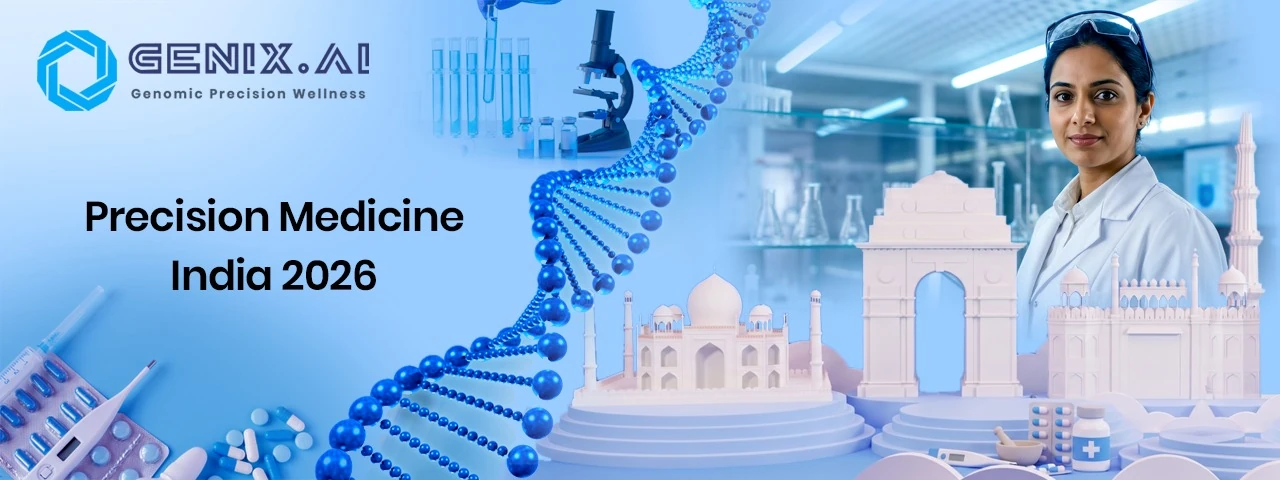
Precision medicine is entering a serious phase in India. Patients ask sharper questions, families read before consultations, and doctors want clearer inputs when genetics may influence care. For hospitals, the challenge is not simply to add another test. The real work is building a safe pathway from consent to clinical review. This is where precision medicine AI can support teams, when guided by doctors, ethics, and patient trust.
Abstract
Precision medicine is moving from a future idea to a working reality inside Indian hospitals. This article looks at how hospitals can bring AI driven genomic protocols into everyday care during 2026 without losing the human judgement that clinical decisions depend on. It starts with the idea that genomic testing should answer a real patient care question rather than being added because the technology exists, and then walks through what needs to be in place before any workflow goes live. That includes clear consent, defined governance around who can request testing, who can view patient data and who reviews AI supported findings. It also covers how to map the full patient journey from consultation to follow up, how to choose technology that fits real hospital workflows instead of creating a parallel process, and why doctors must stay at the centre of every genomic decision. Training, clear reporting for both clinicians and patients, and regular review of the protocol after launch round out the approach. The central idea running through the piece is simple. Genomic AI can organise complex information and support review, but it should never replace clinical judgement, patient trust or the responsibility that sits with doctors.
Start with a Clear Clinical Purpose
Every hospital should begin by asking why genomic protocols are introduced. The answer should come from patient care needs, not technology enthusiasm. A hospital may want better risk understanding, clearer specialist discussion, or structured reporting for complex cases.
Whatever the purpose, it should be shaped through early input from the people responsible for patient care, testing, digital systems, and governance before rollout.
This alignment prevents later gaps. It helps teams decide who recommends testing, who explains consent, who reviews findings, and how reports are discussed. Precision genomics should feel like part of care, not a separate hospital activity.
Build Consent and Governance First
Genomic data is personal, sensitive, and difficult for many patients to understand at first.
Hospitals need a clear consent and governance model before any AIenabled workflow goes live. Consent should explain what the test may show, how data may be used, who may access it, and how results are communicated. The language should be simple enough for Indian patients and families to follow.
Governance should define:
- Who can request genomic testing
- Who can view patient data
- How data is stored
- Who reviews AIsupported outputs
- How reports are approved
- How counselling is arranged
- How audit records are maintained
When artificial intelligence in precision health enters the process, human review becomes even more important. AIsupported information should be traceable, explainable, and checked by qualified professionals before it influences care discussions.
Map the Patient Journey Carefully
A good protocol should make the patient journey easier, not heavier. Hospitals can map each step from consultation to consent, sample collection, sequencing, interpretation, reporting, counselling, and followup. This reveals where delays or unclear ownership may occur.
In India, patients often consult more than one doctor and may involve family members in decisions. The pathway should make every role clear. Each handover should be defined so care moves smoothly from one stage to another.
This planning also shows where AI in precision medicine can support workflow organisation without making the process impersonal.
Choose Technology That Fits Hospital Workflows
Hospitals should choose systems that clinicians can use during busy care routines.
The right clinical genomics technologies should support secure data flow, structured interpretation, evidence review, reporting, and clinicallaboratory collaboration. The platform should work with hospital processes rather than forcing teams to create a parallel routine.
A connected approach for hospitals and health systems can bring data handling, review layers, reporting, governance, and clinical collaboration into one pathway.
Selection should focus on privacy readiness, usability, explainability, training needs, and longterm operational fit. If a doctor cannot understand the output, the system may not earn confidence.
Keep Doctors at the Centre
AI may organise complex genomic information, but care decisions must remain doctorled.
A hospital protocol should clearly state that AIsupported outputs are advisory and reviewbased. Doctors, molecular specialists, and authorised reviewers should relate findings to the patient’s history, condition, and care plan.
This is where genomic intelligence has value. It can structure genetic findings, evidence notes, clinical relevance, and reporting details in a way that supports review. Still, it should never become a black box that simply produces a conclusion.
Hospitals should ensure:
- Outputs are easy to review
- Evidence trails are available
- Review steps are documented
- Reports receive authorised signoff
- Uncertain findings are handled carefully
- Patientfacing language remains clear
This keeps technology useful while protecting clinical responsibility.
Train Teams before Launch
Implementation depends as much on people as it does on software. Each team involved in the pathway should have clarity on its responsibilities before launch. Training should cover consent, patient communication, data handling, report reading, escalation, and followup.
Clinicians need to know when genomic testing may be considered and how AIsupported interpretation should be reviewed. Counsellors need a clear approach for sensitive conversations, while administrative teams should explain steps without overpromising.
Balanced communication matters. Patients should hear that genomic testing may offer useful information, but it may not answer every question. Medical advice and followup remain essential.
Make Reports Clear and Useful
A genomic report should support a conversation, not replace one. Hospitals should design reports with both clinicians and patients in mind. Doctors may need technical interpretation, evidence notes, and review details. Patients need simpler language that explains what the finding means, why it matters, and what discussion should follow.
This is important in India, where health literacy can vary within the same family. Reports should avoid unnecessary jargon, and technical terms should be explained with care.
AIsupported reporting can organise complex information, but final review must stay humanled. The report should show that qualified professionals have examined the findings before they become part of care planning.
Review the Protocol Regularly
A genomic protocol should improve after launch. Hospitals should collect feedback from doctors, counsellors, patients, laboratory teams, and operations staff. This can reveal whether consent is clear, reports are readable, data access is controlled, and followup is smooth.
Review meetings can lead to better training, clearer forms, cleaner workflows, and stronger accountability. This ongoing refinement keeps the programme aligned with patient needs and hospital standards.
Conclusion
Precision medicine in India will grow responsibly when hospitals treat genomics as a clinical pathway, not a technology shortcut. The strongest approach is careful: define the purpose, protect consent, train teams, use secure systems, and keep doctors in control.
With welldesigned protocols, precision medicine AI can make genomic workflows more structured while preserving trust. For Indian hospitals, the aim should be simple: use advanced tools for clearer care, while keeping human judgement, patient dignity, and clinical responsibility at the centre.