Abstract
Every environment on Earth, from the human gut to ocean sediment, is packed with microorganisms that scientists cannot even culture in a lab. Metagenomics gives researchers a way to study all of that hidden microbial life directly from its DNA, without needing to isolate a single organism first. This blog breaks down what metagenomics actually means, how it works in practice, and where it is already changing medicine, agriculture, and environmental science.
Understanding Metagenomics
Metagenomics is the study of genetic material recovered directly from an environmental sample, whether that sample comes from soil, water, a swab of skin or the human intestine. Instead of growing a single bacterial species in a petri dish and studying it alone, researchers extract and sequence all the DNA present at once, capturing the full community of microbes living in that space. This matters because the vast majority of microorganisms simply refuse to grow under standard lab conditions, so traditional culturing methods only ever showed us a small, biased slice of the microbial world.
How It Differs from Traditional Microbiology
Classical microbiology depends on isolating one organism, feeding it in a controlled setting and studying its behavior in isolation. Metagenomics skips that step entirely and reads the genetic code straight from the mixed sample. The result is a far more complete picture of who is present in an ecosystem and, depending on the method used, some sense of what those organisms are doing.
How Metagenomic Analysis Works
1. Sample Collection and DNA Extraction
The process starts with collecting a sample, be it soil, stool, water or a tissue swab, and extracting the total DNA present. Because these samples often contain a mixture of host DNA and microbial DNA, careful extraction protocols are used to preserve as much of the microbial genetic material as possible.
2. Sequencing Approaches
There are two common approaches researchers choose between. The first is 16S rRNA sequencing, which targets a specific gene found in bacteria and archaea and works well for identifying which genera or species are present at a reasonable cost. The second is shotgun metagenomic sequencing, which reads essentially all the DNA in a sample, offering a fuller view of species diversity along with functional genes like those tied to antibiotic resistance or metabolic pathways. Shotgun approaches tend to be more expensive and computationally heavier, but they reveal much more than taxonomy alone.
3. Bioinformatics and Data Interpretation
Once sequencing is done, the real work shifts to computers. Raw reads get filtered for quality, matched against reference databases, and grouped into taxonomic units to figure out which microbes are present and in what proportion. Diversity metrics, functional gene annotation and comparisons across samples all happen at this stage, and this is often the part that trips up labs without dedicated bioinformatics support, since the volume of data from even a single run can be enormous.
Applications of Metagenomics
1. Human Health and the Microbiome
One of the most active areas right now is the human microbiome, the trillions of bacteria, viruses and fungi living in and on our bodies. Metagenomics has helped researchers link gut bacterial composition to conditions ranging from inflammatory bowel disease to metabolic disorders and even certain aspects of mental health, since the gut and brain appear to communicate more than scientists once assumed. It also plays a growing role in detecting antibiotic resistance genes circulating within a patient population.
2. Infectious Disease Surveillance
Public health teams use metagenomic sequencing to identify pathogens directly from clinical or environmental samples, sometimes catching outbreaks earlier than traditional culture based testing would allow. This became especially visible during recent viral outbreaks, where sequencing environmental and clinical samples helped track how pathogens were spreading and mutating in near real time.
3. Agriculture and Soil Science
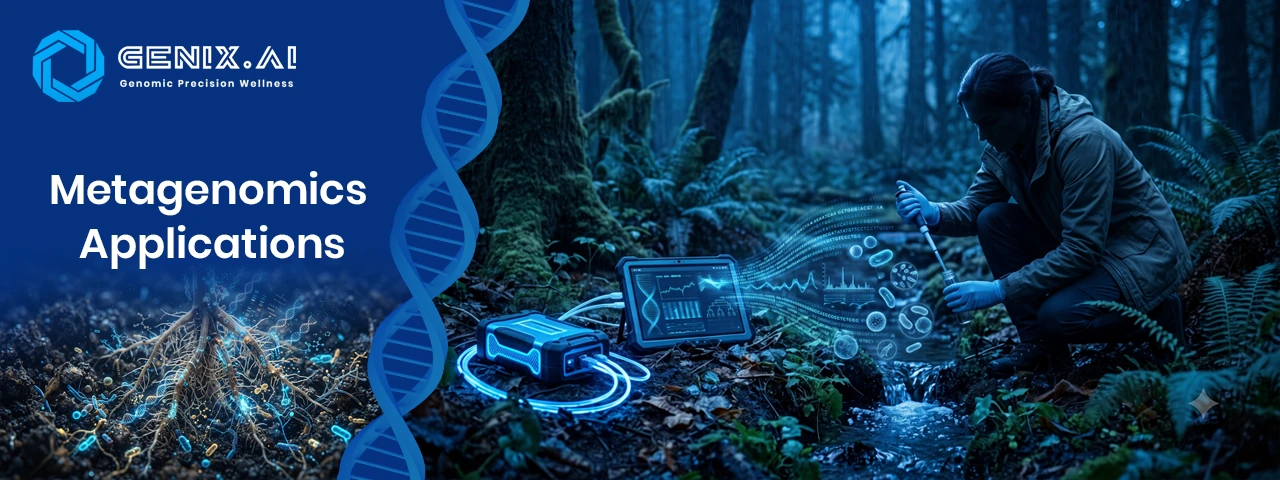
Soil is one of the richest microbial environments on the planet, and understanding what lives there helps farmers and researchers improve crop yield, manage plant disease and reduce dependence on chemical fertilizers.Metagenomic surveys of soil communities of soil communities can reveal which microbes support nutrient cycling or suppress harmful pathogens naturally.
4. Environmental and Water Monitoring
Rivers, lakes and wastewater treatment plants all host distinct microbial communities that shift in response to pollution, temperature and human activity. Metagenomics allows scientists to monitor these shifts over time, flagging contamination or ecosystem stress well before visible signs would show up.
5. Drug Discovery and Biotechnology
Many antibiotics and industrial enzymes originally came from microorganisms, and metagenomics opens access to genetic material from species that cannot be cultured at all, expanding the pool of potential drug candidates and novel enzymes far beyond what classical methods ever reached.
Challenges in Metagenomics
1. Data Volume and Computational Demands
A single shotgun metagenomic run can generate gigabytes of raw sequencing data, and processing that data requires serious computational infrastructure along with pipelines built specifically for microbial analysis rather than human genome work. Labs that try to handle this without the right setup often end up with bottlenecks that stall projects for weeks.
2. Reference Database Limitations
Because so much of the microbial world remains uncharacterized, a portion of sequencing reads in any given study often cannot be matched to a known organism. This is improving as databases grow, but it remains a real limitation researchers have to account for when interpreting results.
Conclusion
Metagenomics has moved from a niche research technique to a practical tool used across medicine, agriculture and environmental science, and the demand for fast, reliable analysis keeps growing alongside it. Genix.ai supports this work through its biocompute service, offering metagenomics analysis covering both 16S and shotgun approaches, with deliverables like taxonomy tables, diversity metrics and ordination plots built for researchers who need results without building an in house bioinformatics team from scratch.
FAQs
1. What is the difference between 16S and shotgun metagenomics?
16S sequencing targets one bacterial gene to identify species present, while shotgun sequencing reads all DNA in a sample for both taxonomy and function.
2. Is metagenomics only used for gut bacteria?
No, it applies to soil, water, clinical samples and virtually any environment containing microbial life.
3. How long does metagenomic analysis typically take?
Turnaround varies by lab and method, though standard 16S or shotgun runs are often completed within about a week.
4. Can metagenomics detect viruses as well as bacteria?
Yes, shotgun metagenomics in particular can capture viral genetic material alongside bacterial and fungal DNA.
5. Do I need a bioinformatics background to use metagenomic data?
Not necessarily, since many labs and service providers handle the analysis and interpretation as part of their offering.