Fitness advice is everywhere, but your body does not always follow a standard plan. You may train regularly, eat carefully and still feel progress is uneven. Some people build endurance more easily. Some need a longer recovery. Some feel prone to strain even with a sensible routine.
Fitness genomics looks at selected genetic markers that may be linked with performance, recovery, injury tendency and nutrition response. A DNA test for fitness does not decide your limits. It gives another layer of information, so your training choices feel more personal and less based on guesswork.
For fitness buyers in India, this can be useful because routines must fit around work, food habits, climate, gym access and sport specific goals.
Abstract:
You can follow every rule in the fitness playbook train consistently, eat carefully, sleep well and still feel like your body isn't quite responding the way it should. That experience is more common than people admit. And often, the missing piece isn't effort. It's awareness.
Fitness genomics looks at selected genetic markers that may be linked to how your body handles endurance, muscle recovery, injury tendency, and nutrition response. It doesn't set your limits. It doesn't replace your coach, your physiotherapist, or the discipline of showing up. What it does is give you a more personal starting point so your training choices are built around your body, not a generic plan designed for everyone.
This article breaks down what fitness genomics actually covers VO2 max tendencies, recovery behaviour, soft tissue awareness, and diet response in plain language, without overstating what a DNA test can or cannot do.
For fitness buyers in India especially, where routines must fit around work schedules, regional food habits, climate, and sport specific goals, this kind of personalised insight can make a real practical difference.
The key message is simple your DNA is not a verdict. It's a guide. And when read wisely alongside professional support it can make your fitness journey feel a lot less like guesswork.
What Is Fitness Genomics?
Fitness genomics studies how selected genes may influence the way your body responds to exercise, recovery and nutrition.
It does not replace coaching, medical advice, physiotherapy or consistent training. It simply adds genetic insight to the larger picture of your health and performance.
A genetic testing for fitness report may look at traits linked with endurance response, power tendency, muscle recovery, soft tissue injury tendency, oxygen utilisation, fatigue, nutrition response and weight management.
This makes genome fitness more personal. Instead of following a routine because it is popular, you can understand what your body may need more attention to.
VO2 Max and Your Genetic Profile
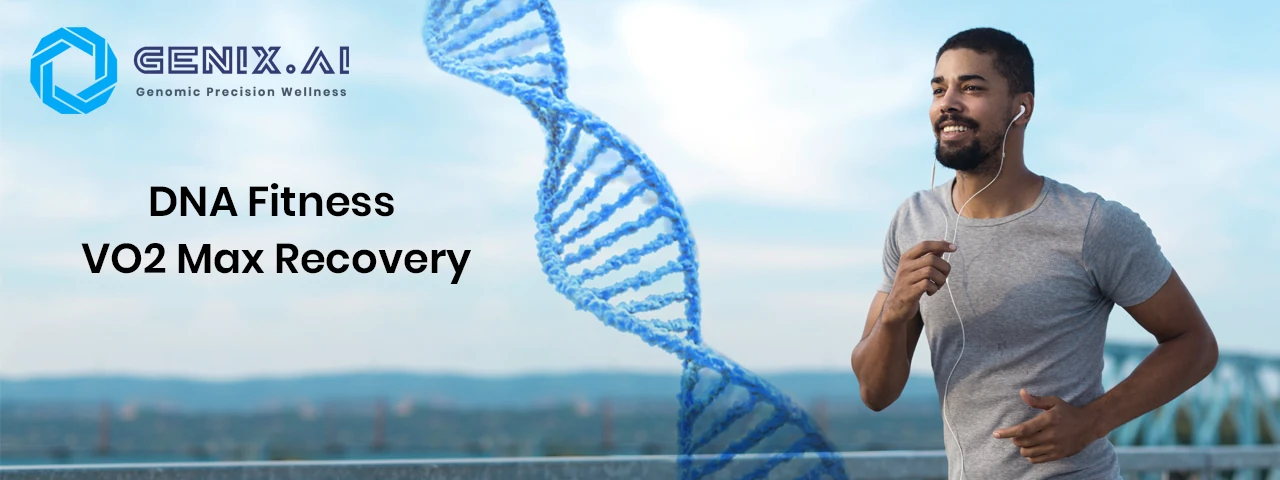
VO2 max is commonly used to understand how efficiently the body may use oxygen during demanding activity. Selected genetic markers may be reviewed to understand whether your body may have a tendency towards stronger endurance adaptation or may need more structured conditioning. This does not mean your VO2 max is fixed. Training, sleep, food quality, recovery and consistency all matter. Genetics may only give a possible direction.
Your fitness report may guide you to think about:
- Whether endurance training needs gradual progression
- How your body may respond to aerobic conditioning
- Why recovery between high effort sessions matters
- Whether your routine needs a balance between intensity and rest
Muscle Recovery and Training Response
Recovery is often ignored until soreness, fatigue or loss of motivation appears. A DNA test for fitness may include markers related to inflammation response, muscle repair and recovery tendency. These insights may help you understand why your body feels fresh after certain sessions but heavy after others.
This does not mean you should train less. It means your plan may need better spacing, warm up quality, protein planning, sleep discipline and active recovery.
Your recovery plan may need attention if you notice frequent muscle tightness, low energy before workouts, longer soreness, repeated strain or a drop in performance despite effort.
Injury Risk and DNA Led Awareness
No test can predict an injury with certainty. However, genetic testing for fitness may review selected markers associated with soft tissue strength, inflammation response, collagen support and recovery behaviour. These may offer useful awareness for people who train often or play sports.
Injury risk is shaped by technique, load, footwear, surface, fatigue, mobility, warm up habits and previous injuries. Genetics is only one part of that picture.
A fitness report may encourage better attention to joint and tendon care, mobility work, strength balance, warm up quality, gradual progression and recovery between sessions.
Fitness Genomics vs Standard Fitness Plans
Standard fitness plans usually begin with a goal. Fitness genomics begins with a closer look at the person behind the goal.
Standard Fitness Plan | DNA Informed Fitness Plan |
Based on general goals | Considers selected genetic tendencies |
Same structure for many users | Supports more personalised planning |
Focuses mainly on workouts | May include recovery, injury and nutrition insights |
Adjustments depend on visible progress | Adjustments may begin with deeper awareness |
This comparison does not mean one approach cancels the other. A DNA informed plan still needs effort, coaching and consistency. It simply gives your plan a more personal starting point.
Where Diet Fits into Fitness Genomics
Training and food cannot be separated. A DNA test for diet and fitness may look at how your body may respond to selected nutrients, macronutrients and lifestyle factors. This can support better meal planning around workout goals.
Your report may include food linked insights such as carbohydrate response, fat metabolism tendency, protein utilisation, vitamin and mineral tendencies, caffeine response, lactose related response and weight management tendencies.
This does not create a fixed diet chart on its own. It can guide more informed conversations with a qualified nutrition professional.
For Indian users, food choices are linked with family habits, regional meals, vegetarian preferences, work schedules and festivals. A useful plan should respect those realities.
How to Read a Fitness Report Wisely
A fitness report should be read as a guide, not a verdict. Your genes may show tendencies, but daily habits decide how those tendencies interact with real life. A good report should explain findings clearly and avoid fear led language.
When reading your report, focus on what each trait means, what it does not mean, which areas need professional review, what habits may support your goals and which insights match your current experience.
What to Look for in a DNA Test for Fitness
Before choosing a test, look beyond convenience and packaging. A useful test should explain what it covers, how results are handled and how the findings can be used responsibly. It should also respect privacy because genetic data is personal.
Look for clear trait categories, easy sample collection, secure data handling, understandable reporting, fitness and nutrition relevance, careful interpretation of language and support for expert guided decisions.
Final Thoughts
Fitness genomics is changing how people think about training, recovery and performance. It does not replace hard work, coaching, balanced food or rest. It may give you a more personal way to understand your body.
A DNA test for fitness can offer insight into traits linked with VO2 max, muscle recovery, injury tendency and nutrition response. Used wisely, it can support better fitness planning for everyday exercisers, sports buyers and performance focused individuals.
Your DNA should not be treated as a limit. It can be treated as a guide. To explore fitness focused genomic options, visit the all products page and review Genix Perform™ for fitness genomics.